Today, a conference committee begins hashing out differences between the House and Senate visions for financial regulatory reform. As Congress begins deliberations on another sweeping overhaul of a complex national system with broad, international implications, one would hope they are well informed about the bills over which they'll be haggling.
But just a week ago, a member of the Financial Crisis Inquiry Commission told billionaire investor Warren Buffett that "no one" has read the text of the financial regulatory reform bills, "including some of the co-sponsors."
Bill Thomas, former Republican Congressman and vice chairman of the commission, asked Buffett in a June 2 hearing what the Congress had gotten "mostly right" or wrong in financial regulatory reform. When Buffett confessed he had not read the "1500-page bills," Thomas told him no one had, so his admission was "a denial that's okay." Buffett smiles as staffers in the background chortle over the disclosure. Moments like these will not help Congress' all-time low rating among voters.
Showing posts with label Financial Reform. Show all posts
Showing posts with label Financial Reform. Show all posts
Friday, June 11, 2010
Nah. No one's read the 1500-page financial reform bills
Mary Katharine Ham found a video nugget on C-SPAN that Congressional Democrats don't want you to see. From The Weekly Standard on Thursday:


Wednesday, May 19, 2010
Reid loses cloture vote on financial reform bill
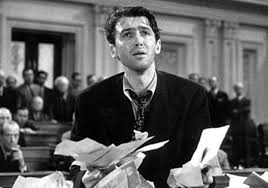
Senate Democrats Wednesday suffered a procedural defeat in trying to move toward a final vote on landmark financial reform legislation, failing to overcoming Republican opposition.Roll Call gets the headline right: Senate Democrats Fail to End Debate on Wall Street Bill:
The Senate rejected a cloture vote—57-42—denying Democrats a chance to limit further debate to 30 hours before holding a final vote on whether to approve the complex legislation.
The Democrats needed 60 votes to avoid the possibility of a filibuster. They control 58 seats and can usually count on the support of independent Bernie Sanders of Vermont.
Democrats Maria Cantwell of Washington and Russell Feingold of Wisconsin both voted no, which might help explain why the vote was postponed from its original time of 2 p.m. to allow for one more caucus meeting.
Maine's two Republican senators, Susan Collins and Olympia Snowe, voted in favor of cloture.
Senate Democrats defeated a procedural motion to their own financial reform bill Wednesday as Members continued debating time agreements over a handful of amendments.Both stories seem to be leaving something out. If the Democrats control 59 votes and Arlen Specter was absent (recovering from his career-ending finish in yesterday's Pennsylvania Senate primary), leaving 58, and they lost two Dems and gained the Maine sisters, the yea vote count should have been 58. But it was 57. Either another Democrat voted no or they failed to get the support of Mr. Sanders from Vermont. I'll post the answer when the roll call vote is posted.
In any case, I proud of the Republicans that voted no on what Senator Jim DeMint called the worst Senate bill in history.
Update: Mea culpa. I forgot that Harry Reid would vote no if his vote would not change the outcome. It's a procedural thing which allows him to bring up the motion again.
Wednesday, April 28, 2010
Chris Dodd's carve-outs for cronies

Mark A. Calabria writes for the New York Post (via Big Government):
The financial-regulatory bill now before the Senate is so filled with special-interest loopholes and exclusions that it makes the health-care "reform" bill, with its "Cornhusker Kickback" and "Louisiana Purchase," look like a model of rectitude.The drafters of this 1136-pager do not make it easy for the uninitiated to discern that it actually rolls back consumer protections. But sure enough, if you look on page 903 the bill expressly excludes real estate agents from the authority of the CFPA, and on page 1098 it effectively transfers the powers of the Secretary of HUD under RESPA to the CFPA.
The Senate bill, sponsored by Democrat Chris Dodd, claims to subject all "too big to fail" institutions to greater federal supervision, but in fact it only mandates such regulation for bank-holding companies. Regulators would have to make a case-by-case decision on whether to apply it to other financial companies.
That's no minor oversight, because insurance companies, like AIG, tend to have thrift charters rather than bank charters. So, as the bill stands now, AIG and other insurers that accepted massive bailout funds, such as The Hartford, would not be automatically covered. That's a head-scratcher only if you forget that most insurance companies reside in Dodd's home state, Connecticut.
But the section of the bill most littered with exemptions is probably the proposed consumer-protection bureau. In some instances, these exclusions actually roll back existing consumer protections.
Remember the mortgage crisis? Well, the primary consumer-protection law for homebuyers is the 1974 Real Estate Settlement Procedures Act. The law requires the timely, accurate disclosure of relevant closing costs and prohibits "kickbacks" for the steering of settlement services.
For example, your real-estate agent cannot, under RESPA, be paid a fee for steering you toward a certain home inspector, title company or other closing service. Yet, under the Dodd bill, real-estate agents would be exempted from RESPA. If that weren't bad enough, the Dodd bill exempts insurers and attorneys -- both now subject to RESPA -- from its consumer protections, too.
Read the rest of Mr. Calabria's article here.
James Gattuso at the Heritage Foundation has identified 14 fatal flaws in the Dodd financial reform bill.
Capitol Confidential at Big Government explains why "Obama-Dodd Financial Reform Helps Wall Street, Hurts Everyone Else."
Friday, April 23, 2010
(Freddie and Fannie #1 beneficiary Chris) Dodd bill silent on Freddie and Fannie

TO: Valerie Jarrett, Senior Advisor and Assistant to the President for Intergovernmental Affairs and Public Engagement
FROM: Congressman Scott Garrett
SUBJECT: Fannie Mae and Freddie Mac
DATE: Thursday, April 22, 2010
I was a bit perplexed by your comments during your interview on Fox News this morning when you highlighted the importance of addressing excessive risk taking in our financial sector but discounted reforming the two biggest risk takers in our economy -- Fannie Mae and Freddie Mac. Based on your remarks, it appears to me that you might not be fully informed of the facts surrounding these two entities, their government bailout and their continued excessive risk taking. With leverage ratios reaching more than 100 to 1, Fannie Mae and Freddie Mac’s risk taking far outstripped anything that the private sector was doing. Given the importance of this issue, I wanted to take the opportunity to provide you with some facts on what many respected economists have called the “ground zero” of the financial crisis. Of course, you don’t have to take just my word on this.
“Like a lot of my Democratic colleagues, I was too slow to appreciate the recklessness of Fannie and Freddie…Frankly, I wish my Democratic colleagues would admit, when it comes to Fannie and Freddie, we were wrong.” Rep. Artur Davis (D-Ala.) (USA Today, October 14, 2008)
The government needs to look no further than itself to find the root cause of the financial crisis. In attempts to meet a dual public and private mission, Fannie and Freddie endorsed lower and lower underwriting standards which allowed significantly less credit-worthy borrowers to purchase homes. These new standards then paved the way for financial institutions to begin seeking new ways to underwrite and approve loans, degrading the overall creditworthiness of securitized products.
“From the current handwringing, you'd think that the banks came up with the idea of looser underwriting standards on their own, with regulators just asleep on the job. In fact, it was the regulators who relaxed these standards--at the behest of community groups and "progressive" political forces. . . . For years, rising house prices hid the default problems since quick refinances were possible. But now that house prices have stopped rising, we can clearly see the damage done by relaxed loan standards.” Stan Liebowitz, University of Texas at Dallas (New York Post, February 5, 2008)
During the interview you claim that the Obama Administration and the Democrats are trying to fix the problems that “actually led to the financial meltdown,” yet I don’t see how you can possibly exclude Fannie Mae and Freddie Mac in your reform considerations. It is very easy to connect the dots on how the affordable housing goals of Fannie Mae and Freddie eventually led to the massive explosion of the subprime market and the housing collapse from which we are still recovering. Yet for some reason, both you and President Obama fail to see this as the underlying problem that needs to be promptly addressed. Instead, the Obama Administration is advancing legislation which is merely a band-aid treating a few of the symptoms of our recent economic crisis while failing to adequately address the underlying cause.
"It doesn't address GSE reform, which arguably is the most costly part of the entire bailout process…If you look at the money we've actually spent on the bailout … the GSEs are costing us billions. There is no solution to that. That fact is the biggest gap in the reform." Hal Scott, International Financial Systems, Harvard Law School (American Banker, April 12, 2010)
The fact that has been obscured by the Administration during this regulatory reform debate is that the largest recipients of government assistance since the economic crisis began are actually not Wall Street banks. The largest recipients of taxpayer dollars during this economic crisis are Fannie Mae and Freddie Mac, which are already expected to cost taxpayers at least $389 billion, according to the non-partisan Congressional Budget Office (CBO). Rather than stem the tide of support for these entities, the Department of Treasury announced on Christmas Eve in 2009 that they would provide unlimited taxpayer-funded support for Fannie Mae and Freddie Mac through 2012. Unlimited. Today, more than $8.1 trillion in GSE securities is outstanding, and both Federal Reserve Chairman Ben Bernanke and Treasury Secretary Tim Geithner have stated that the U.S. government has an unwavering commitment to these obligations. Which brings up another point -- at the very least, it is inconceivable that the President has not come out in favor of being fully transparent about the costs of the bailout of Fannie and Freddie and putting those true costs on budget. Why is the Obama Administration unwilling to advance reforms to protect American taxpayers from this $8.1 trillion risk?
“The silence on Fannie and Freddie is deafening. How can they look at themselves in the mirror every morning thinking that they have a regulatory reform bill and they are totally silent on Fannie and Freddie? It just boggles my mind." Lawrence White, Economics Professor, NYU (American Banker, April 12, 2010)
As you can see, there is widespread agreement that these two entities were the root cause of the financial meltdown. Despite this, the Obama Administration has not proposed a single reform measure to address this issue in the 15 months since the President took office. Considering then-Senator Obama received the second most campaign contributions from Fannie and Freddie, behind only current Senate Banking Chairman, Chris Dodd, and that Senator Obama was one of the Senate Democrats that blocked GSE Reform legislation from getting to the Senate floor in 2005, I can see why you might be hesitant to discuss them and rightly recognize their role in the collapse of the housing market. Might I suggest that, for the good of the country, President Obama stand up and admit he was wrong in blocking Fannie and Freddie reform and now put forth a plan to reform them to make up for his past misdeeds.
With taxpayers on the hook for $8.1 trillion in obligations and quarterly bailouts to Fannie and Freddie, the failure of the Obama Administration to prioritize complete reform of Fannie and Freddie is irresponsible. Your failure to recognize the importance of this matter during your Fox News interview appears to be an explicit acknowledgement that the Obama Administration would rather use the financial crisis to play politics with our nation’s economy than offer legitimate solutions.
Thursday, April 22, 2010
George Soros: The man behind the financial reform curtain?
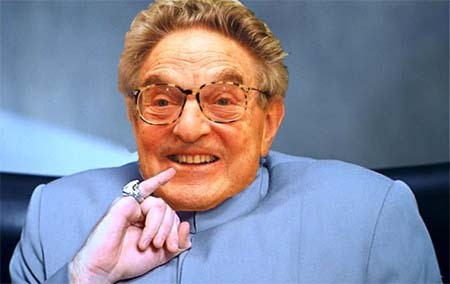
At the end of 2007, hedge fund billionaire John Paulson invested $15 million in the leftist non-profit, Center for Responsible Lending, their largest single donation ever. Around the same time, Paulson and his employees contributed over $100,000 to the Democratic Senatorial Campaign Committee, headed, at the time, by Sen. Chuck Schumer. Roughly six months later, CRL and Sen. Schumer both launched a highly public attack on the California-based mortgage lender, Indymac. The lender failed, wiping out the investment of thousands of people. Roughly six months after that, John Paulson, in partnership with George Soros, bought up the remnants of Indymac for pennies on the dollar.Read the whole thing and ask yourself, why on earth would Republicans cave in to this corrupt, "bailouts in perpetuity" sham of a financial reform bill?
It is a drama that no longer surprises us, unfortunately. Wealthy investors use their access to elected officials and their checkbook to advocacy groups for private profit. But this story has a twist; a top executive of CRL when this deal went down, Eric Stein, is now working at the Treasury Department, heading up the proposed Consumer Financial Protection Agency. Mr. Stein will be the chief federal official designing regulations to protect consumers. Right.
This is that story.
Reasonable answers lead to disturbing conclusions about our elected representatives.
Tuesday, April 20, 2010
Financial reform or sneaky Wall Street bailout?
Last Friday, the day after Chrysler filed for bankruptcy, I drove past the company’s headquarters on Interstate 75 in Auburn Hills, Mich.Fast forward to the present and compare the treatment of the bondholders of GM and Chrysler with provisions in the financial reform legislation heading for a vote as early as next week in the Senate. Brian Darling of the Heritage Foundation lays it out for Human Events:
As I glanced at the pentagram logo I felt myself tearing up a little bit. Anyone who grew up in the Detroit area, as I did, can’t help but be sad to see a once great company fail.
But my sadness turned to anger later when I heard what bankruptcy lawyer Tom Lauria said on a WJR talk show that morning. “One of my clients,” Lauria told host Frank Beckmann, “was directly threatened by the White House and in essence compelled to withdraw its opposition to the deal under threat that the full force of the White House press corps would destroy its reputation if it continued to fight.”
Lauria represented one of the bondholder firms, Perella Weinberg, which initially rejected the Obama deal that would give the bondholders about 33 cents on the dollar for their secured debts while giving the United Auto Workers retirees about 50 cents on the dollar for their unsecured debts.
This of course is a violation of one of the basic principles of bankruptcy law, which is that secured creditors — those who lended money only on the contractual promise that if the debt was unpaid they’d get specific property back — get paid off in full before unsecured creditors get anything. Perella Weinberg withdrew its objection to the settlement, but other bondholders did not, which triggered the bankruptcy filing.
After that came a denunciation of the objecting bondholders as “speculators” by Barack Obama in his news conference last Thursday. And then death threats to bondholders from parties unknown.
The White House denied that it strong-armed Perella Weinberg. The firm issued a statement saying it decided to accept the settlement, but it pointedly did not deny that it had been threatened by the White House. Which is to say, the threat worked.
There are two specific problems with the Senate approach to “reform.”I'm sure the bondholders of GM and Chrysler who lost their life savings and retirement will be interested to know why President Obama didn't see fit to protect them, calling them "speculators", but is now prepared to legislate future creditor protection for failing financial institutions through the "full faith and credit of the U.S. government" FDIC.
First, this legislation would create a new $50-billion bailout slush fund controlled by the Federal Deposit Insurance Corporation (FDIC). Very big banks and other “eligible financial companies” would be taxed by the FDIC to build up this fund. As with any tax, though, it’s consumers--you and me–who would eventually pay this levy.
The Obama Administration this weekend requested that the $50 billion pre-funded bailout money be removed from the bill. But according to Foxnews.com, Treasury Secretary Tim Geithner advocated last year that any bailout funding should be addressed post bailout through a tax on big Wall Street firms. If Senate Democrats only take out the $50 billion slush fund and leave the bailout authority intact, then the taxpayers will still be on the hook for any future bailouts.
Another problem with this bill is that it would bail out the creditors of companies and wouldn’t require any creditor to take a loss after a company starts to fail. If the bailout slush fund is tapped, the FDIC would have the power to reimburse creditors. That could allow the FDIC to pay creditors more than they invested (pursuant to Section 210 of the Dodd bill).
Think about that. If creditors know they aren’t likely take a loss, and risk has been eliminated from an investment, its taxpayers who are assuming all the risk. Of course, taxpayers get none of the rewards if the investments pay off–we would simply be on the hook if they fail. Taxpayers could expect no reward for having insured transactions and protected wealthy investors from any risk. The AIG bailout is a great example of this model.
If left unchecked, the Obama administration will continue to use its regulatory agencies and the Congress to protect its friends and destroy its enemies. I hope the Republicans will find the courage to filibuster this disastrous financial reform bill.
Update: The Heritage Foundation has more on why this bill will harm consumers if it becomes law.
Friday, April 2, 2010
Will Dodd finance reform kill Silicon Valley?

Angel investors don’t usually stay up at night worrying about Capitol Hill. But a financial reform bill proposed by Chris Dodd, the Democrat chairing the Senate Banking Committee, includes new restrictions on startups and angels.This overreaching legislation may be too much even for the left:
Not surprisingly, investors aren’t happy about it, saying it’s “insane,” “frankly ridiculous,” and aims to “destroy Silicon Valley.”
There are three changes that should have a particular effect on angel investors, a catch-all category which includes everyone from friends and family members who invest in a startup, to unaffiliated wealthy individuals, to side investments made by venture capitalists acting on their own.
First, Dodd’s bill would require startups raising funding to register with the Securities and Exchange Commission, and then wait 120 days for the SEC to review their filing. A second provision raises the wealth requirements for an “accredited investor” who can invest in startups — if the bill passes, investors would need assets of more than $2.3 million (up from $1 million) or income of more than $450,000 (up from $250,000). The third restriction removes the federal pre-emption allowing angel and venture financing in the United States to follow federal regulations, rather than face different rules between states.
Chris Sacca, an angel investor and former Googler who campaigned for Obama, also tweeted that people who “care about startups and making sure they have access to capital” need to sign a petition against the investing regulations.In "Cutting Angels' Wings", Kejda Gjermani at Commentary Magazine expresses the view that the proposed restrictions on startup funding will be debilitating to startups and a windfall for "Big Business:"
I asked Sacca for more details about his opposition. In a voicemail, he said:
Obviously, I’m deeply concerned about Senator Dodd’s proposal to place these restrictions on angel investing. I think angel investing is undeniably one of the largest engines for job creation as well as innovation and competitiveness on the global scale for the United States. There’s no doubt about it that the restrictions that he’s proposing would absolutely chill investing.I think this is a very short-sighted proposal. It seems far afield from the problems that the banking committee is actually trying to address.
Specifically, one of the things we need to take into account is while 10 years ago it may have taken years to build a company, companies are now built in a matter of weeks. So this 120-day waiting period is frankly ridiculous. I have companies with tens of thousands and hundreds of thousands of users that are built in a matter of weeks. They’re generating actual dollars of revenue, creating jobs, investing in real estate office space, capital equipment, etc. If they had to wait 120 days to actually apply for the ability to obtain financing it would absolutely just crush that market.
All the prerogatives over private businesses; all the power over health care, now near absolute; all the dabbling in the inner workings of financial institutions; in short, all the regulation in the world, couldn’t satisfy this government. Are the Democrat legislators ever going to have enough? Or is their regulatory fetish feverishly looking for new, exotic objects?
While Obama sheds crocodile tears over how hard startups have it, his henchman is working night and day to ensure that they never receive seed funding. Whichever way this bill is looked at, not a single rationalization for saddling angels with such burdens can be found. Unless, of course, Democratic legislators so believe in their own rhetoric of strife against them big, eeeevil corporations that they want to kill them in their womb or prevent them form ever being born, let along growing big. And if such is the motive, conscious or unconscious, no measures could backfire more sorely than the ones being dealt out. For any regulation that raises new barriers to entry eventually hinders competition, confers undue advantages to incumbents, and fosters just the kind of environment where oligopolies can flourish. If there ever were such a sinister monolithic entity as “Big Business,” it could not be more satisfied with this bill. But it is surely an occasion for entrepreneurs to weep, as I can attest from being married to one, all of whose startups owe their inception to angel investment and might have never come into existence under such debilitating regulation. Economic recovery in America is being dealt a crippling blow.
Wednesday, March 24, 2010
Will Walmart, IBM and Boeing pay for the next bailout?
In The Wall Street Journal, former Bush Treasury official, Gregory Zerzan warns of the blatant overreach of the financial reform bills winding their way through the Congress, and makes the case that "current proposals for "financial" reform are stalking horses allowing government intervention into virtually every facet of the U.S. economy." The proposed banking regulations extend to "nonbank financial companies" as determined by the Federal Reserve:
The list of companies that might find themselves subject to new Federal Reserve regulation is as deep as the U.S. economy itself. An airplane manufacturer that holds customer down payments for future delivery, a large home improvement chain that invests its profits as part of a plan to increase revenues, and an energy firm that makes markets in derivatives are all engaged in "financial activities" and potentially subject to systemic risk regulation. Under the House bill, and even more so under the Dodd legislation, companies that had absolutely nothing to do with the financial crisis of 2008 are finding that they are the object of so-called "financial services reform".The idea that government regulation of the private sector can prevent the next national financial crisis is dubious at best. Considering the roles that the heavily regulated banking sector and the government-backed behemoths Fannie Mae and Freddie Mac played in the recent financial meltdown, I would even call such an idea laughable. I think Mr. Zerzan is absolutly correct. The Democrats are just looking for new wallets to raid.
Why would the systemic risk regulator seek to make regular American businesses subject to bank-like regulation? No doubt in part it is the belief in some quarters that the government can stop financial crises from happening if only it has enough power and influence over the economy. Even among true believers the near-collapse of the highly regulated banking sector should call that article of faith into question. But there is a more practical reason to seek to turn Walmart, IBM, Boeing and other Fortune 500 companies into "financial" businesses. Under both the House bill and the Dodd legislation it is these companies that are to be taxed to pay for winding up a "too big to fail" firm. If a company gets deemed systemically risky it is on the hook for bailing out financial firms that took on too much risk. Such a regime is neither fair nor sensible from an economic perspective, but existing taxpayers' money is already over-allocated; the Treasury needs the contents of new wallets to pay for the next crisis.
Senator Dodd's systemic risk proposal would authorize the Federal Reserve to have an unprecedented role in regulating the U.S. economy. This proposition deserves more scrutiny and debate than it has thus far received.
Subscribe to:
Posts (Atom)


