Showing posts with label Recession. Show all posts

Thursday, May 13, 2010

Dear Mr. President, I need a freakin job. Period.

Interrupting his tireless pursuit of the new, "improved" (and renamed) cap and trade legislation, bailouts in perpetuity financial reform and the legal challenge to the new Arizona immigration law which his Attorney General hasn't read, President Obama visited Buffalo, New York, today to trumpet his administration's success in creating jobs.  He was greeted by this:


From the Yahoo Newsroom:

"I need a freakin' job." That's the message President Obama saw as he arrived in Buffalo, N.Y., this afternoon for an event talking up the administration's success in creating new jobs. He also pitched Congress on approving a $30 billion credit for small-business growth.

Yet critics say Obama has been focusing his recovery efforts too narrowly and hasn't done enough to help people find work. After all, the latest job figures show 9.9 percent of the country still out of work. That inspired a group of unemployed Buffalo residents — who also have a website called INAFJ.org — to appeal to the president in the form of a billboard along the route his motorcade took into town.
The group also has produced this video:


The White House just announced that the President will travel to Youngstown, Ohio next week where unemployment hit 15.1% last month, the highest rate in 15 years.  I expect his advance team will be scouring the landscape for a more photo-hospitable motorcade route.

Wednesday, March 24, 2010

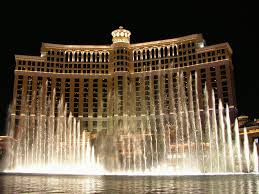
Las Vegas: America's most underwater housing market

U.S. News and World Report names "America's Most Underwater Housing Markets."  Las Vegas, Nevada has the devastating distinction of being number one:
Las Vegas was ground zero for the housing market's historic boom and bust. Loose lending standards and speculative fervor helped send home prices surging more than 104 percent from 2002 to their 2006 peaks, according to Moody's Economy.com. "We all knew in our hearts it was unsustainable and there had to be a correction," says Larry Murphy, the president of SalesTraq. That correction came as the housing bubble popped and the economy tanked: Home prices in Las Vegas fell more than 56 percent from 2006 to the third quarter of 2009. This steep decline has pulled a vast swath of mortgage borrowers underwater. "If you bought a home in Las Vegas since 2004 up to about 2007, whatever you bought—I don't care if you bought a big house or a little house, in a great neighborhood or a crummy neighborhood—it's worth about half what you paid for it," Murphy says. More than 81 percent of single-family home mortgages in Las Vegas had negative equity in the fourth quarter of 2009, according to Zillow. And it may take 20 years for some of these home values to climb back to the levels they hit at the peak of the housing boom, Murphy says. (emphasis added)
The burden of negative home equity in a state with an unemployment rate of 13% (second only to Michigan) is a heavy one for any family.  I wonder how much comfort Nevadans took from Senate majority leader Harry Reid's remarks after the Senate passed its $18 billion jobs bill last week:
"Thousands of Nevadans and millions of Americans are struggling to find work and are worried about being able to support their families," Reid said after the Senate passed its $18 billion jobs bill last week. "Today's vote is vital because more than 1 million jobs will be saved or created by this bill," he said, indicating that more such bills are coming."
Jobs created or saved.  He sounds like the robot from "Lost in Space" in the 1960's.  I thought that phrase already had a fork stuck in it.  I'm quite sure the good people of Nevada aren't counting on Reid's empty promises.  And they are likely wondering why their senior Senator, the most powerful member of the U.S. Senate, squandered an entire year pursuing a health care bill that Americans don't want and ignoring the economic pain, suffering and joblessness in his own state.

In case you're interested the rest of the "top ten" underwater cities are:

2. Merced, California
3. Phoenix, Arizona
4. Orlando, Florida
5. Greeley, Colorado
6. Bend, Oregon
7. Minneapolis-St. Paul, Minnesota
8. Memphis, Tennessee
9. Cleveland, Ohio
10. Grand Rapids, Michigan

Wednesday, January 6, 2010

Welcome to the government payroll economy!

During my stint in business school back in the eighties, a crusty economics professor often lamented the decline of American manufacturing.  He used to say, and I'm paraphrasing, "Hell, in twenty years all our manufacturing jobs will have moved overseas, and we'll be left just cutting each other's hair."  He was partially right.  The manufacturing employment skid has steepened dramatically since 2000.  According to the Bureau of Labor Statistics about 2.1 million manufacturing jobs have been lost just since December 2007.  But instead of cutting each other's hair, it looks like we'll all be working for Uncle Sam.

This graphic comes from Business Insider by way of Ed Morrissey at Hot Air.


Quoting from Business Insider:
In the just-so story of the evolution of our economy, our old manufacturing based economy has been replaced by an innovative knowledge economy. That's not quite true.


In fact, the decline of the jobs in goods producing sectors of the economy--construction, manufacturing, mining and agriculture--has largely been met with an increase in jobs on the government payroll. We've gone from providing jobs in profit-making private industry to providing jobs in profit-eating government work. Toward the end of 2007, the total number of government jobs exceeded the total number of goods producing jobs. Welcome to the government payroll economy.
Ed Morrissey believes this trend explains why public-sector employees are more optimistic than private-sector employees.  That makes sense.  According to the ADP national employment report released today, 7.4 million private-sector jobs have been lost since the recession began.  Meanwhile, federal employees are keeping their jobs and making more money:
A review of federal salary data by USA Today shows that employees making salaries of $100,000 or more jumped by 5 percent during the recession's first 18 months. That's before overtime pay and bonuses are counted.


During the same 18 months of the recession, the private sector lost 7.3 million jobs.


USA Today says the trend to six-figure salaries is taking place throughout the federal government due to substantial pay raises and new salary rules.


The growth in six-figure salaries has pushed the average federal worker's pay to $71,206, compared with $40,331 in the private sector.
That could inspire optimism or outrage, depending on your point of view.