Showing posts with label Iran. Show all posts

Saturday, June 19, 2010

Latest Iranian cleric fatwa targets ......dogs

This Reuters news report speaks for itself:
Dogs are considered "unclean" under Islamic tradition but, while relatively rare in Iran, some people do keep them as pets.

By issuing a fatwa -- a religious ruling -- Grand Ayatollah Naser Makarem Shirazi has sent a clear message that this trend must stop.

"Friendship with dogs is a blind imitation of the West," he was quoted as saying in Javan daily. "There are lots of people in the West who love their dogs more than their wives and children."

Guard dogs and sheep dogs are considered acceptable under Islamic law but Iranians who carry dogs in their cars or take them to public parks can be stopped by police and fined.

The Koran does not explicitly prohibit contact with dogs, Shirazi said, but Islamic tradition showed it to be so. "We have lots of narrations in Islam that say dogs are unclean."

The interpretation of religious rules on personal conduct is a constant source of debate and potential conflict in Iran which has been an Islamic republic since a revolution ousted the Western-backed Shah in 1979.

Sunday, June 6, 2010

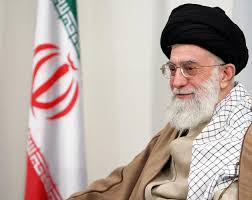
Khamenei: Iran ready to escort Gaza blockade-runners

Reuters is reporting that Iran is ready to provide military escorts to ships trying to break Israel's Mediterranean blockade of Gaza:
Iran's elite Revolutionary Guards are ready to provide a military escort to cargo ships trying to break Israel's blockade of Gaza, a representative of Supreme Leader Ayatollah Ali Khamenei said on Sunday.

"Iran's navy forces are ready to escort the peace flotilla to Gaza with all their powers and capabilities," Ali Shirazi, Khamenei's representative inside the Revolutionary Guards, was quoted as saying by the semi-official Mehr news agency.

Any intervention by the Iranian military would be considered highly provocative by Israel which accuses Iran of supplying weapons to Hamas, the Islamist movement which rules Gaza.

The Guards, with their own navy, air force and command structure separate from the regular armed forces, are seen as fiercely loyal to the values of the Islamic Republic.

"If the Supreme Leader issues an order for this then the Revolutionary Guard naval forces will do their best to secure the ships," Shirazi said. "It is Iran's duty to defend the innocent people of Gaza."

Last Monday Israeli troops killed nine activists on board one ship in a convoy trying to deliver aid to Gaza, sparking international outrage, especially in Muslim countries.

Another ship was boarded on Saturday and pro-Palestinian activists have promised more as they challenge the blockade imposed four years ago with the stated aim of stopping arms getting to Hamas.

Prime Minister Benjamin Netanyahu said Israel will continue to stop ships reaching the shore and creating "an Iranian port in Gaza", a reference to Iran's support for Hamas.
Moments ago, on Fox News Sunday, Chris Wallace asked Israel's Amabassador to the U.S., Dr. Michael B. Oren, what his country's response would be to ships approaching Gaza with Iranian escorts.  Oren said that Israel would defend her 7.5 million citizens by any means necessary.

Update: Reuters has corrected its original report to clarify that reference in paragraph 2 is to Revolutionary Guards naval forces.

Friday, May 21, 2010

Obama: Missile defense for Iran, but not for our allies

In a desperate attempt to get something approved by the U.N. Security Council on Iranian nuclear proliferation, the Obama administration has agreed to a loophole that former U.N. Ambassador John Bolton says is "big enough to drive a truck through:"
The Obama administration on Friday lifted sanctions against four Russian entities involved in illicit weapons trade with Iran and Syria since 1999, and acknowledged exempting a Russian-Iranian missile deal from a U.N. draft resolution banning most missile sales to Iran.

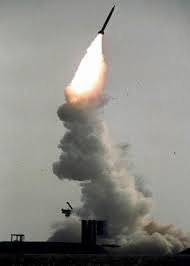
The move comes just three days after the U.S., Russia and other key powers reached agreement on a draft resolution sanctioning Iran for violating U.N. demands to halt its uranium enrichment program. The draft includes a loophole that would exempt a 2005 Russian deal, valued at hundreds of millions of dollars, to sell Tehran five S-300 surface-to-air missile systems.

The removal of the four entities, which was recorded in Friday's Federal Register, suggested that the United States engaged in some last-minute bargaining to ensure Moscow's support for sanctions. The companies include Russia's state arms exporter, Rosoboronexport, which was sanctioned for its dealing with Iran in 2006 and 2008, and Moscow Aviation Institute, one of three entities sanctioned in 1999 for aiding Iran's development of ballistic missiles and nuclear weapons.
It's official.  The Russians say "jump" and the Obama administration asks, "how high?"  Quite a reset, I'd say.

Gone are the days when President Ronald Reagan stood at the Brandenburg Gate in Berlin and implored Mr. Gorbachev to "Tear down this wall!"  Now we find ourselves in an era in which the President of the United States reneges on our government's commitment to provide missile defense to our allies in Eastern Europe (Poland and the Czech Republic) at the behest of the Russians.  Then, less than a year later, we agree to a U.N. resolution which expressly permits the Russians to deliver surface-air-missile systems to Iran.  You know, the S-300's that will be positioned to neutralize any Israeli or U.S. (just kidding) attack on Iran's nuclear facilities.

It's understandable that the "U.S official" who issued this statement today in defense of the U.N. agreement prefers to remain anomymous:
"It's worth mentioning that Russia has not transferred the S-300s," the official said. "That's not to say they couldn't do it tomorrow. But they haven't done it."
Pathetic.

Sunday, April 18, 2010

Leaked Gates memo: U.S. lacks policy to deal with Iran

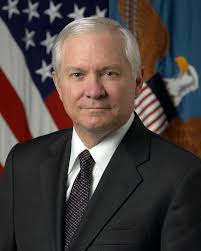
In what should be considered a news bombshell, The New York Times is reporting that Secretary of Defense Robert Gates wrote a top secret memorandum to top White House officials warning that the U.S. lacks a long-range policy to deal with Iran's quest for nuclear capability:
Several officials said the highly classified analysis, written in January to President Obama’s national security adviser, Gen. James L. Jones, came in the midst of an intensifying effort inside the Pentagon, the White House and the intelligence agencies to develop new options for Mr. Obama. They include a set of military alternatives, still under development, to be considered should diplomacy and sanctions fail to force Iran to change course.

Officials familiar with the memo’s contents would describe only portions dealing with strategy and policy, and not sections that apparently dealt with secret operations against Iran, or how to deal with Persian Gulf allies.

One senior official, who like others spoke on the condition of anonymity because of the sensitive nature of the memo, described the document as “a wake-up call.” But White House officials dispute that view, insisting that for 15 months they had been conducting detailed planning for many possible outcomes regarding Iran’s nuclear program.
It should come as no surprise that the Times is willing to leak classified information, but he timing of the leak -the memo is three months old- to coincide with the gap between the Won's nuclear summit and the Sunday news shows is quite interesting.  Allahpundit muses:
Exit question: Why was this leaked now? The memo was written in January but only today are “government officials” finally whispering about it to the Times. Normally I’d assume that it was leaked by the White House itself in yet another naive attempt to pressure allied powers about the severity of the threat, but the story’s simply too embarrassing to Obama. Presumably the leakers are insiders who are worried that, three months later, we’re still not taking the prospect of an Iranian bomb seriously enough. We will be tomorrow.
Whatever the source and motivation for the leak, it sends a clear message to Israel (just in case Obama's arrogant  and dismissive treatment of Prime Minister Benjamin Netanyahu didn't do the trick) that any meaningful effort to stop Iran's nuclear march rests on the Jewish state alone.

Wednesday, March 31, 2010

US test fires Trident missile in Saudi Arabia

From The Washington Post:
The United States test-fired a submarine-launched ballistic missile capable of carrying nuclear warheads during a joint military exercise Wednesday with Saudi Arabia, a Western military official said.

The Trident missile launch was carried out in the kingdom, the official said, but he would not give a precise location. He spoke on condition of anonymity because of the sensitivity of the issue.

The U.S. has been strengthening missile defenses in allied Arab nations in the Gulf to help counter any potential missile strike from Iran. Like its nuclear work, Iran's missile program is of top concern to Washington and Arab nations wary of Tehran's growing influence in the region.

A defense official in Washington confirmed the missile launch on condition of anonymity because he was not authorized to speak on the record. He said, however, that it took place late last week and was part of a demonstration.
Saudi Arabia has long warned that a nuclear Iran would result in a nuclear arms race in the Middle East.  In addition to "rattling the biggest sabre of all in Iran's face" as Closing Velocity puts it, the U.S. launch of a Trident missile in a joint drill with the Saudis suggests that both countries believe that a nuclear Iran is inevitable.  In an interview with Fox News this morning, former U.S. Ambassador to the U.N. John Bolton reiterated his conclusions that any sanctions effort against Iran is doomed to fail and that the Obama administration is prepared to accept a nuclear Iran.

Danielle Pletka from the American Enterprise Institute agrees that sanctions will fail and ponders what comes next:
Some Gulf states (including, some say, Qatar, which hosts American forces and equipment) have begun to openly propitiate the Tehran regime, anticipating its regional dominance once it is armed with nuclear weapons. Others, not reassured by Clinton drop-bys and ineffectual back-patting, have begun to explore their own nuclear option. Repeated rumors that Saudi Arabia is negotiating to buy an off-the-shelf Pakistani nuclear weapon should not be ignored.

What of Israel? The mess of U.S.-Israel relations has ironically only bolstered the fears of Arab governments that the current U.S. administration is a feckless ally. If the U.S. won't stand by Israel, by whom will it stand? Conversely, our adversaries view both the distancing from Israel and the debacle of Iran policy as evidence of American retreat. All the ingredients of a regional powder keg are in place.

Finally, there is the military option. Israeli Prime Minister Bibi Netanyahu left Washington last week befuddled by Mr. Obama's intentions on Iran. Should Israel decide to attack Iran, the shock waves will not leave the U.S. unscathed. Of course, Mr. Obama could decide that we must take action. But no one, Iran included, believes he will take action.

And so, as the failure of Mr. Obama's Iran policy becomes manifest to all but the president, we drift toward war. The only questions remaining, one Washington politico tells me, are who starts it, and how it ends.

Sunday, March 28, 2010

John Bolton: Obama resigned to a nuclear Iran?


In an interview with Army Radio, former U.S. ambassador to the U.N. John Bolton expressed his concern that President Obama is willing to accept a nuclear Iran.  From The Jerusalem Post:
Former US ambassador to the UN John Bolton expressed concern Sunday that Washington was coming to terms with a nuclear Iran.

“I very much worry the Obama administration is willing to accept a nuclear Iran, that's why there's this extraordinary pressure on Israel not to attack in Iran,” Bolton told Army Radio.

The former envoy claimed that this pressure was the focus of last week's meetings in Washington between Prime Minister Binyamin Netanyhau and US officials, including President Barack Obama.

Bolton said that the Obama administration had embraced the view, prevalent in Europe, that the Israeli-Palestinian conflict was the key to the resolution of all other conflicts throughout the Middle East, including the Iranian conflict.

He added that the rift in US-Israel relations stemmed from a fundamental difference in the understanding of the Middle East and Israel's role in the Middle East, and is not really about east Jerusalem at all.

Bolton said that the treatment Netanyahu received during his visit "should tell the people of Israel how difficult it's going to be dealing with Washington for the next couple of years."
After repeated toothless warnings, meaningless deadlines, and warm and fuzzy New Year video greetings, Americans can similarly infer how President Obama will be dealing with Iran for the next couple of years.  By then as Ambassador Bolton predicts, our next president will likely be dealing with a nuclear Iran.

Tuesday, March 23, 2010

Netanyahu: "Jerusalem is not a settlement. It is our capital."

In advance of his meeting today with President Obama, Israel Prime Minister Benjamin Netanyahu made it clear in his AIPAC speech yesterday that his country will continue to build housing in East Jerusalem.  From Fox News:
Netanyahu’s address at AIPAC Monday night sounded more like a line in the sand, rather than an attempt to work with the United States. “Jerusalem is not a settlement. It is our capital,” Netanyahu said. "Everyone knows that these neighborhoods will be part of Israel in any peace settlement. Therefore, building in them in no way precludes the possibility of a two state solution." His comments came hours after Secretary of State Clinton told the same group that a building freeze in Israel would greatly increase security for that country. And while Netanyahu said Israel has no intention of governing Palestinians, and his country is “unjustly accused of not wanting peace with the Palestinians,” Netanyahu said nothing could be further from the truth.

Republican Whip Eric Cantor (VA), the only Jewish Republican in Congress, met with Netanyahu on Tuesday and says the attempt to fan the flames on settlements is not helping the overall peace situation in the region. “There are broader issues at stake here and the construction issue in Jerusalem is a red herring,” Cantor told Fox News’ White House Correspondent Wendell Goler. “This is not what these peace talks should be about, these peace talks should be about what could create a lasting and enduring peace.”

But Cantor says, despite controversy over the settlements, Netanyahu was not unreasonable in his meeting with lawmakers about the issue of Jerusalem and said that it is understood there’s a difference between building in Israel and building in Jerusalem. “The issue of construction of Jerusalem is separate from the issue of settlement construction. This is a non-issue, it is not linked to the greater security in the region, and I think that it is an attempt by some in the region to continue to fan the flames, that is not helpful at all in terms of driving peace,” Cantor said.
President Obama exacted his punishment on the Prime Minister by refusing to appear with him in the customary press photo op during his White House visit today.  He was further punished when he had to appear at the Capitol with Senators John Kerry and Charles Schumer.  Enough is enough.

The video of Netanyahu's AIPAC speech is included in its entirety in four parts below.  It's a very good lesson in the history of the Jewish state and he is an excellent speaker.  I encourage you to take the time to listen.


Friday, February 26, 2010

Iran and Syria mock Secretary of State Clinton; Obama yawns

In a recent post, I wrote about the diplomatic stiff-arm response the Obama administration had received from Syria after it lifted travel restrictions and nominated an ambassador to the country for the first time since 2005.  It is actually much worse than I thought.  The Guardian (UK) paints a picture of utter contempt and mockery for the United States, and more specifically, Secretary of State Hillary Clinton:
Iran and Syria put on show of unity in alliance Clinton finds 'troubling'Ahmadinejad and Assad accuse the Americans of trying to dominate Middle East

The presidents of Syria and Iran put on show of unity Link to this video Iran and Syria put on a show of defiant unity today, scorning US efforts to break up their alliance and warning Israel not to risk attacking either of them.

Mahmoud Ahmadinejad, the Iranian president, flew to Damascus for talks with Bashar al-Assad days after the US appointed an ambassador to Syria after a five-year gap – a move seen by some as the start of a diplomatic thaw.

"The Americans want to dominate the region but they feel Iran and Syria are preventing that," Ahmadinejad said during a press conference with Assad.

"We tell them that instead of interfering in the region's affairs to pack their things and leave. If the Zionist entity wants to repeats its past errors, its death will be inevitable."

Assad made clear that Syria would not distance itself from Iran, its ally since the 1979 Islamic Revolution. "We hope that others don't give us lessons about our region and our history," he said. "We are the ones who decide ... and we know our interests. We thank them for their advice. I find it strange how they talk about Middle East stability and at the same time talk about dividing two countries."

Hillary Clinton, the US secretary of state, said yesterday that the US was troubled by Syria's relationship with Iran and characterised the appointment of an ambassador as a "slight opening". Ties between Washington and Damascus were downgraded after the murder of the former Lebanese prime minister, Rafiq al-Hariri, in 2005 was blamed on Syria.

Al-Jazeera reported that Ahmadinejad also met Khaled Mash'al, the Damascus-based leader of the Palestinian movement Hamas, and Ramadan Shallah of Islamic Jihad, both of which are supported by Tehran. Links between Hamas and Iran have been highlighted by the killing of the Hamas official Mahmoud al-Mabhouh, by an alleged Israeli hit squad in Dubai.

Two years ago the military leader of Lebanon's Hizbullah, Imad Mughniyeh, was assassinated in Damascus in an attack that was also blamed on Israel's secret service, the Mossad. It was not clear whether Ahmadinejad was also meeting Hassan Nasrallah, the Hizbullah leader.

Syria and Iran announced they were cancelling visa restrictions between their countries. "We must have understood Clinton wrong because of bad translation or our limited understanding, so we signed the agreement to cancel the visas," Assad said. (emphasis mine)
I don't think this is what President Obama envisioned when he made his inaugural address in January of 2009:
To the Muslim world, we seek a new way forward, based on mutual interest and mutual respect. To those leaders around the globe who seek to sow conflict, or blame their society's ills on the West--know that your people will judge you on what you can build, not what you destroy. To those who cling to power through corruption and deceit and the silencing of dissent, know that you are on the wrong side of history; but that we will extend a hand if you are willing to unclench your fist.
The U.S. has extended its hand to Syria and received the equivalent of a middle finger in response.  Call me old fashioned, but I don't think any U.S. President worth his salt would allow his Secretary of State, a former First Lady and U.S. Senator to be mocked in this way without a strong response.  It's time to roll up the welcome mat to Syria, recall the new ambassador before he gets to Damascus, reinstate the travel advisory and impose a gasoline embargo on Iran.

To delay, is to concede nuclear nation status to a regime devoted to the destruction of Israel and the United States of America.

Is Tehran deliberately inviting an air strike?

The New York Times is reporting another puzzle in the Iranian nuclear saga:
When Iran was caught last September building a secret, underground nuclear enrichment plant at a military base near the city of Qum, the country’s leaders insisted they had no other choice. With its nuclear facilities under constant threat of attack, they said, only a fool would leave them out in the open.

So imagine the surprise of international inspectors almost two weeks ago when they watched as Iran moved nearly its entire stockpile of low-enriched nuclear fuel to an above-ground plant. It was as if, one official noted, a bulls-eye had been painted on it.

Why take such a huge risk?

That mystery is the subject of fervent debate in the White House and the C.I.A., and among European, Israeli and Arab officials trying to decode Iran’s intentions. The theories run from the bizarre to the mundane: Under one, Iran is actually taunting the Israelis to strike first. Under another, it is simply escalating the confrontation with the West to win further concessions in negotiations that have dragged on four months. The simplest explanation is that Iran has run short of suitable storage containers for radioactive fuel, so it had to move everything.
Julian Borger at The Guardian (UK) has more:
They were many striking elements in the new International Atomic Energy Agency report on Iran, not least its blunt language on the "possible military dimensions" of the Iranian programme. But the strangest part of it was this:

On 14 February 2010, Iran, in the presence of Agency inspectors, moved approximately 1950 kg of low enriched UF6 from FEP to the PFEP feed station. The Agency inspectors sealed the cylinder containing the material to the feed station.
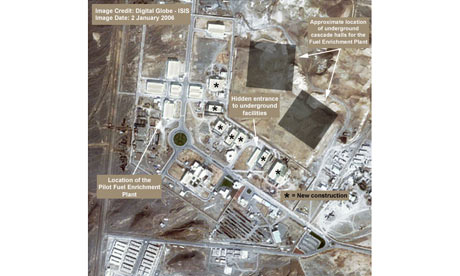
That means that Iran took 94% of its entire stock of low enriched uranium (LEU) from the huge underground tunnels and chambers of its Fuel Enrichment Plant at Natanz and brought it to the surface, to its Pilot Fuel Enrichment Plant (see satellite picture above), which is currently producing 20% enriched uranium, and which is clearly visible from the air.

This stunning move is both provocative and risky. It is provocative because it signals an intention to enrich its LEU from its current level of purity of 3.5% U-235 up to 20%, which is most of the way, in engineering terms, to making weapons-grade material. [Arms Control Wonk has a good explanation of why in the world of uranium enrichment, 20 is closer to 90 than it is to 3.5]

Even if Iran had the technology to turn the 20% uranium into fuel rods for its medical research reactor in Tehran, it does not need two tonnes of LEU. According to ISIS, that much LEU would render about 200kg of 20% uranium. The Tehran Research Reactor needs no more than 18.4 kg annually.

The move is risky because it involves shifting Iran's crown jewels, its 2-tonne LEU stockpile, from subterranean safety where it was invisible to Israeli air force targeteers, to a clearly defined location that might as well have a bullseye painted on the roof.

Why would a regime that is normally so paranoid about its LEU leave itself so vulnerable? One possible explanation, being mused on by British government analysts, is that the regime is deliberately inviting an Israeli air strike with the aim of creating a crisis, and using that crisis to crush dissent even more brutally than it is doing currently.

It is a terrifying idea, but not the only possible explanation. It may be, as David Albright at ISIS suggests, that the Natanz technicians were in a hurry to fulfil President Ahmadinejad's orders to enrich to 20%, and it was quicker to drive the whole cask of enriched uranium hexafluoride up the ramp to the pilot plant, than try to decant it into small containers.

A third possibility is that Iran is playing poker, bringing out its trump in an attempt to get the international community to fold, and agree to supply Iran with fuel rods to the TRR without Iran having to export its LEU in advance as it initially agreed to do in Geneva last October. Tehran may believe that the danger of an Israeli air strike is minimal because the repercussions in the Gulf would be so devastating.

All three versions are all quite plausible, and they are all extremely dangerous. Israel may not be considering a strike imminently and appears content for the time being to explore how far sanctions will go, but that position may not last. The Israelis may consider 2010 a brief window of opportunity, following the exposure of the secret enrichment plant near Qom, and before Iran gets very far with the ten new ones it says it wants to build.
This report was issued on February 18, but Iran's curious relocation of its low-enriched uranium stores has received little coverage in the MSM.  You can read the IAEA Iran report here (pdf).

Monday, February 22, 2010

Iran to airlines: Don't call it the Arabian Gulf!

Facing sanctions from east and west in response to its nuclear program, Iran has decided to draw a line in the....runway:
Airlines not referring to the waterway between Iran and the Arabian peninsula as the Persian Gulf will be banned from Iranian airspace, the transport minister told local media Monday.

The warning was directed specifically toward the airlines of neighboring Gulf Arab countries who have a history of referring to the body of water as the "Arabian Gulf."

"The airlines of the southern Persian gulf countries flying to Iran must use 'Persian Gulf' on their flight monitors," Hamid Behbahani told the IRAN daily.

Airlines ignoring the warning would be banned from Iranian airspace, while repeat offenders would have their planes grounded in Iran and "the companies' flight permits to Iran canceled."

The report said Iran expelled a Greek flight attendant from the private Iranian airline, Kish Air, for using "Arabian Gulf" on a monitor over the weekend.
Iran is facing sanctions on its Revolutionary Guard Corp., a possible embargo on gasoline, and the possibility of a devastating military strike from Israel.  It's good to know that their priorities are clear.

Scary.

Friday, February 19, 2010

IAEA: The last horse crosses the finish line

The International Atomic Energy Agency (IAEA) announced yesterday that it has information that Iran may be working on a nuclear warhead.  Wall Street Journal:
The International Atomic Energy Agency, a Vienna-based U.N. body, said in a confidential report Thursday that Iran has impeded agency efforts to establish the true purpose of Tehran's nuclear program.

The new director-general of the International Atomic Energy Agency, Yukiya Amano, holds a meeting on his first day in office on Dec. 1, 2009 in Vienna.

"The information available to the agency...raises concerns about the possible existence in Iran of past or current undisclosed activities related to the development of a nuclear payload for a missile," IAEA Director General Yukiya Amano wrote in the report.

The expression of concern over the "weaponization" of enriched uranium is a first for the agency.

The IAEA's first report under its new director general underscores what senior Obama administration officials see as a shift at the agency toward a tougher, factually based approach to Iran's nuclear program. One senior U.S. official said Mr. Amano is sticking strictly to the watchdog's responsibilities of ensuring that nuclear safeguards are obeyed.
J.E. Dyer from the Greenroom at Hot Air, makes the case that any information the IAEA has gleaned from its uranium tabulations in Iran are based on historical data about the uranium yellowcake it obtained from South Africa in the 1970's.  It does not take into account, nor does it have the capacity to take into account the indigenous uranium that Iran has mined within its own borders:
Most Americans are unaware of the arcane fact that Iran’s uranium enrichment operations were focused, until sometime in 2008, on a stash of yellowcake obtained from South Africa in the 1970s, when the Shah was still in power. Even fewer are aware that the UN’s accountability on the amount of low-enriched uranium (LEU) Iran has on-hand depends on knowing how much raw material there was to start with. When the IAEA certifies that it has detected no diversion of enriched uranium away from Iran’s supervised facilities, it can only do that in the context of what it knew about to begin with.

Still fewer Americans know that in 2008, Iran rapidly accelerated her use of indigenously mined uranium, to the point that by December of that year, everything being enriched in the centrifuges at the Natanz enrichment plant south of Tehran was reportedly mined in Iran. And equally few Americans know that IAEA doesn’t inspect Iran’s uranium mines or the refining and milling facilities. Due to a set of factors relating to the Nuclear Non-proliferation Treaty’s “Additional Protocol,” IAEA inspects only Iranian activities closer in the pipeline to actual weaponization.

There are probably rocket scientists among Hot Air’s distinguished readership, but it doesn’t take one to immediately recognize what’s wrong with this picture. If IAEA doesn’t know how much uranium Iran has mined and produced yellowcake from, its only reliable accountability is on whatever amounts it sees Iran process, at the production facilities at Esfahan (where uranium is converted to uranium hexafluoride, or UF6) and at Natanz, where it is enriched. If Iran can arrange to convert and enrich her own yellowcake elsewhere, IAEA will have no way to detect the “diversion” through tabular accounting alone. The diversion will start before the material even gets to its first stop at Esfahan.
Read the whole thing.

Here's my take.  If the hapless IAEA is finally concerned about Iran's nuclear intentions, the world should be gravely concerned.

Wednesday, February 10, 2010

Pray for the people of Iran

The Wall Street Journal reports that Iranian officials are mobilizing forces in advance of Thursday's anniversary of the Islamic Republic in an attempt to quash antigovernment protests:
On Wednesday, semi-official news services and opposition Web sites reported last-minute attempts by police and plain-clothes militia to suppress antigovernment demonstrations.

Basij militia took over a large bus and taxi station in western Tehran, shutting it down and draping a banner over the terminal stating the area will serve as headquarters for security forces.

Iranian Web sites said the bus terminal would also be used by security forces coming in from the provinces to help suppress protests in the capital.

The government typically buses in large numbers of government supporters from outlying regions to Tehran to participate in rallies.

Meanwhile, human-rights groups in Iran reported late Wednesday that 19 mothers whose children were killed in previous post-election unrest, had been detained by authorities.

Iranians have reported widespread service disruptions to Internet and text messaging services, though mobile phones appeared to be operating normally Wednesday.

Iran's telecommunications agency announced what it described as a permanent suspension of Google Inc.'s email services, saying instead that a national email service for Iranian citizens would soon be rolled out. It wasn't clear late Wednesday what effect the order had on Google's email services in Iran.
Today the U.S. Treasury Department announced new sanctions on Iran, freezing the assets of an individual and four companies affiliated with Iran's Islamic Revolutionary Guard Corps.  The affected individual is Islamic Revolutionary Guard General Rostam Qasemi.  The affected companies are: Fater Engineering Instituten Imensazen Consultant Engineers Institute, Makin Institute and Rahab Institute.

Iran's embassies in Paris and Copenhagen have been the object of green paint attacks, an apparent protest of the Iranian regime. Taiwan News explains:
Green is a symbol for the reform movement in Iran and for opposition leader Mir Hossein Mousavi. His backers claim he was the rightful winner in June presidential elections, not victorious incumbent President Mahmoud Ahmadinejad.
Israel Prime Minister Benjamin Netanyahu yesterday called for "crippling sanctions" against Iran:
"Iran is racing forward to produce nuclear weapons," Prime Minister Benjamin Netanyahu told a group of European diplomats yesterday, calling for tough and immediate action by the international community as Iran moved ahead with plans to enrich uranium to the 20-per-cent level.

"This means not moderate sanctions, or watered-down sanctions," Mr. Netanyahu said. "This means crippling sanctions and these sanctions must be applied right now.
Ahmadinejad has promised a "telling blow to global arrogance" tomorrow.

A perfect storm is brewing.  Say a prayer for the people of Iran.

Saturday, January 30, 2010

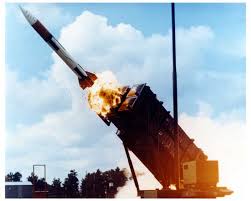
Nobel Peace Prize President sends Aegis cruisers and Patriot missiles to the Middle East

The New York Times is reporting that the U.S. is escalating efforts to provide missile defense to its reluctant allies in the Middle East.:

The Obama administration is accelerating the deployment of new defenses against possible Iranian missile attacks in the Persian Gulf, placing special ships off the Iranian coast and antimissile systems in at least four Arab countries, according to administration and military officials.

Qatar, the United Arab Emirates, Bahrain and Kuwait have accepted American Patriot missiles, military officials said.

The deployments come at a critical turning point in President Obama’s dealings with Iran. He is warning that his diplomatic outreach will now be combined with the “consequences,” as he put it in the State of the Union address, of the country’s continued defiance on its nuclear program. The administration is trying to win broad international consensus for sanctions against the Iranian Revolutionary Guards Corps, which Western nations say controls the military side of the nuclear program.

As part of that effort, Secretary of State Hillary Rodham Clinton publicly warned China on Friday that its opposition to sanctions was shortsighted.

The news that the United States is deploying antimissile defenses — including a rare public discussion of them by Gen. David H. Petraeus — appears to be part of a coordinated administration strategy to increase pressure on Iran.

The deployments are also partly intended to counter the impression that Iran is fast becoming the most powerful military force in the Middle East and to forestall any Iranian escalation of its confrontation with the West if a new set of sanctions is imposed. In addition, the administration is trying to show Israel that there is no immediate need for military strikes against Iranian nuclear and missile facilities, according to administration officials, all of whom requested anonymity.

By highlighting the defensive nature of the buildup the administration was hoping to avoid a sharp response from Tehran.
So the buildup is designed to allay the existential fears of Israel while simultaneously avoiding a sharp response from Iran?  Meanwhile, Obama sends Secretary of State Clinton to Paris to scold China for its lack of support for Iranian sanctions in the same week that his administration announced  its plans to sell $6.4 billion of weapons and aircraft to Taiwan in compliance with the 1979 Taiwan Relations Act.

The President's stalled domestic agenda is about to look like a cake walk.

Friday, January 15, 2010

Iranian diplomat in Norway resigns in protest


A veteran Iranian diplomat has resigned in protest of his government's brutal suppression of dissent in that country.  From Fox News:
A veteran Iranian diplomat based in Norway has resigned from his post, denounced his government and urged colleagues around the world to do the same after the regime’s brutal suppression of huge opposition demonstrations last month.


Mohammed-Reza Heydari, Iran’s consul in Oslo, is the first Iranian diplomat to publicly quit and condemn the regime. He revealed that it sought to lure him back to Tehran after rumors of his defection surfaced last week. At the time, the Iranian Foreign Ministry insisted that the rumors were baseless.


In an interview with the Norwegian television channel NRK, Heydari said that he decided to resign after Iranian security forces killed a dozen demonstrators on Dec. 27.


“I hope my friends and colleagues in other parts of the world who see and hear me now and know me will move in the same direction as their people. I hope they will manage to sacrifice some personal interests and rather think of what is in the interest of their people and their nation,” he said.


Heydari said that he did not fear for his life, but in the past the regime has arrested the relatives of those, such as Shirin Ebadi, the Nobel peace laureate, who criticize it from abroad. Opposition Web sites said that Heydari’s brother was a well-known Iranian television presenter.
According to the Washington Post, Iran's foreign minister denied reports of Heydari's resignation:
Iran's Foreign Ministry spokesman Ramin Mehmanparast told Reuters: "The report is baseless. A diplomat returns to the country when his mission is finished in another country."


"Sometimes they stay longer in the country where they served as diplomats for various reasons, including waiting for the end of school semesters of their children," Mehmanparast added.
This is reminiscent of Iraq's then information minister, Muhammad Saeed al-Sahhaf, who claimed that there were no American troops in Baghdad in April, 2003 even as American tanks were patrolling the streets only a few hundred meters from where he was speaking.

I applaud the courage of Mr. Heydari and pray for the safety and liberty of his family.

Wednesday, January 13, 2010

The mullahs took my father away


Michael Ledeen was notified of the arrest of the father of Mehdi Khalaji, a scholar at the Washington Institute.  From the Corner at National Review online:
I have received a heartbreaking, but alas all too typical, e-mail from Mehdi Khalaji, the thoughtful scholar at the Washington Institute. His father, Mohammed Taqi Khalaji is a distinguished theologian, as befits a student of Grand Ayatollah Montazeri. Yesterday, goons from the Intelligence Ministry arrested him, ransacked the house, carted off his computer, satellite dish, and personal items, and seized all family members' passports, informing them that they cannot leave the country.


As usual in these disgusting matters, his whereabouts are unknown.


The best we can do — aside from working overtime to bring an end to the evil regime that afflicts the Iranian people and tirelessly works to kill Americans — is to make sure he is not forgotten by adding his name to the long list of political prisoners whose release our diplomats should demand in all appropriate fora. Mehdi has it entirely right when he writes, "I believe spreading the news is better than keeping silent. I deeply appreciate any effort to disseminate the news of my father's arrest and I am ready to discuss it this with media."


Let's hope he has every opportunity to do that.
You can read Mehdi Khalaji's biography here.  His personal website is here.

Tuesday, January 5, 2010

Iran professors risk jail to stand up for students


The New York Times reports:
Risking expulsion and possible arrest, 88 professors at Tehran University signed a letter on Monday calling on Ayatollah Ali Khamenei, the country’s supreme religious leader, to end the use of violence against protesters, saying it was a sign of the government’s weakness.

“Nighttime attacks on defenseless student dormitories and daytime assaults on students at university campuses, venues of education and learning, is not a sign of strength,” the letter read in part. “Nor is beating up students and their mass imprisonment.”
Additional translation of the letter is provided by In The News (UK):
"It is still very difficult for us to accept that a group with several tools and weapons and with previous coordination can attack the university and for two subsequent days beat and hit students - the pure sons and daughters of this land -, destroy public properties, insult the university professors and disrespect the center of country's engineering."

The full text of the letter in Farsi is published at AUT News here.
Rick Moran at American Thinker thinks the Iranian mullacracy may be heading for a fall:

We had heard rumors of this activity by the Basij who it was said routinely broke into student dorms and randomly beat students and hauled others away. This letter from the professors confirms the rumor and demonstrates an out of control security apparatus.


Such actions are not tamping down the protests but rather igniting them. My guess is the next big catalyst for demonstrations may very well topple Khamenei and his crew.
Apparently undaunted by the prestigious dissent, Iran announced today that it is has banned cooperation and contact with 60 "seditious" western groups that it accuses of inciting unrest in Iran:
Iran’s Intelligence Ministry has issued a list of 60 U.S. and international organizations that it accuses of inciting this summer’s postelection unrest and being involved in a “soft war” against the Islamic Republic.


The list, carried by Iranian state media on January 4, includes a number of human rights organizations and research and academic institutes, including the Open Society Institute of U.S. philanthropist George Soros, Human Rights Watch, Freedom House, and Yale University.


A number of Farsi-language media, including RFE/RL’s Radio Farda, the BBC, VOA, and Radio Zamaneh, which is based in the Netherlands, were also singled out by the Intelligence Ministry.


The unprecedented move appears to be part of the Iranian authorities' efforts to isolate critics and activists inside Iran and prevent them from having any contact with the outside world.


Activists and opposition supporters say Iranian authorities have been intensifying efforts to limit the free flow of information in and out of Iran in the wake of mass protests against June's disputed presidential election.
Could this be the "next big catalyst" of which Rick Moran spoke?

Thursday, December 31, 2009

U.S. releases "dangerous" Iranian proxy behind the murder of U.S. troops

The Long War Journal is reporting that the U.S. has released an Iranian prisoner responsible for the murders of five U.S. soldiers in Karbala in 2007:
Qais Qazali, the leader of the Asaib al Haq or the League of the Righteous, was set free by the US military and transferred to Iraqi custody in exchange for the release of British hostage Peter Moore, US military officers and intelligence officials told The Long War Journal. The US military directly implicated Qais in the kidnapping and murder of five US soldiers in Karbala in January 2007.


“We let a very dangerous man go, a man whose hands are stained with US and Iraqi blood,” a military officer said. “We are going to pay for this in the future.”


The US military has maintained the release of members and leaders of the League of the Righteous is related to a reconciliation agreement between the terror group and the Iraqi government, but some US military officers disagree.


“The official line is the release of Qazali is about reconciliation, but in reality this was a prisoner swap,” a military intelligence official said.


Moore and four members of his personal bodyguard were kidnapped at the Finance Ministry in Baghdad in May 2007 by a group that calls itself the Islamic Shia Resistance, which is in fact a front for the League of the Righteous. The group had always insisted the release of Qais, his brother Laith, and other members of the Asaib al Haq be released in exchange for Moore and the others. Three of Moore’s bodyguards were executed while in custody, and the fourth is thought to have been murdered as well.


“This was a deal signed and sealed in British and American blood,” a US military officer told The Long War Journal. “We freed all of their leaders and operatives; they [the League of the Righteous] executed their hostages and sent them back in body bags. And we’re supposed to be happy about it.”
Andy McCarthy wrote about the negotiations for the release of these terrorist murders back in June of 2009 (H/T HotAir):
Prepare to be infuriated.


On Jan. 20, 2007, five American soldiers were killed and three seriously wounded in Iraq. As Bill Roggio relates at the Long War Journal, it was a daring operation: a twelve-man terrorist team disguised as U.S. servicemen attacked our troops as they held a previously arranged meeting with local officials in Karbala. Four of the soldiers were alive when they were abducted from the scene. They were handcuffed and murdered in a remote location when the coalition forces attempting to rescue them closed in.


Given the sophistication of the raid and the intelligence required to pull it off, it was a virtual certainty that the mullahs’ special forces, the Iranian Revolutionary Guard Corps, were behind it. More than a decade earlier, in concert with Hezbollah (Iran’s forward terrorist militia), the IRGC had bombed the Khobar Towers in Saudi Arabia, killing 19 members of the United States Air Force. In Karbala, the IRGC had relied on what Michael Ledeen of the Foundation for Defense of Democracies aptly calls its “most lethal element,” the Quds (Jerusalem) Force, in combination with a burgeoning, Hezbollah-like network of local Shiite terrorists.


This was confirmed two months later when U.S. forces captured Ali Mussa Daqduq, a high-ranking veteran of Hezbollah, in Basrah. As Roggio explains, Daqduq had been tasked by Iran to organize a network of terror cells to strike coalition forces in Iraq. The network would operate under the direction of Qais Qazali. Qazali and his brother, Laith Qazali, were captured along with Daqduq.


Unquestionably, Iran, acting through the Qazali network — which is better known as Asaib al-Haq, or the League of the Righteous — was responsible for the murder of our troops in Karbala. As Ledeen documents in his book The Iranian Time Bomb (reviewed here), Gen. David Petraeus made that clear at an April 2007 press conference. Petraeus detailed that the Qazali brothers were among “the key members” of a network of “extremist secret cells.” These groups, he said, 
were provided substantial funding, training on Iranian soil, advanced explosive munitions and technologies as well as run-of-the-mill arms and ammunition, in some cases advice and in some cases even a degree of direction. When we captured these individuals . . . we discovered . . . a 22-page memorandum on a computer that detailed the planning, preparation, approval process, and conduct of the operation that resulted in five of our soldiers being killed in Karbala . . . . There are numerous documents which detailed a number of different attacks on coalition forces, and our sense is that these records were kept so that they could be handed in to whoever it is that is financing them. And there’s no question, again, that Iranian financing is taking place through the Quds Force of the Iranian Republican [sic] Guards Corps.
About two weeks ago, the Obama administration released Laith Qazali after extensive negotiations with the Asaib al-Haq terror network. That network has long been in negotiations with the fledgling Iraqi government, dangling the possibility of laying down its arms, renouncing violence, and integrating into Iraqi society, provided that its top members — particularly Qais and Laith Qazali, as well as Ali Mussa Daqduq — be released. Realizing, however, that these terrorists were responsible for kidnapping and killing American soldiers in gross violation of the laws of war, the Bush administration had declined to release them.


The Obama administration has not only released Laith Qazali, it has been in negotiations to release his brother, Qais Qazali, as well. The negotiations and release were carried out in flagrant disregard of the longstanding policy against exchanging prisoners for the release of hostages. Undermining that policy endangers all American troops and civilian personnel — as well as the troops and civilian personnel of our allies — by encouraging terrorists to kidnap them to use as bargaining chips.
Today seven CIA agents were killed by Taliban suicide bombers in Afghanistan.  Meanwhile Obama is releasing murderers of our troops, so they can live to kill another day.  Disgusting.

Tuesday, December 29, 2009

Iran to purchase 1,350 tons of puified uranium ore from Kazakhstan


The AP is reporting that Iran is nearing an agreement with a source in Kazakhstan to import 1,350 tons of purified uranium ore:
Iran is close to clinching a deal to clandestinely import 1,350 tons of purified uranium ore from Kazakhstan, according to an intelligence report obtained Tuesday by The Associated Press. Diplomats said the assessment was heightening international concern about Tehran's nuclear activities.


Such a deal would be significant because, according to an independent research group, Tehran appears to be running out of the material, which it needs to feed its uranium enrichment program.


The report was drawn up by a member nation of the International Atomic Energy Agency and provided to the AP on condition that the country not be identified because of the confidential nature of the information.


In Washington, State Department spokesman Ian Kelly said, "the transfer of any uranium yellowcake ... to Iran would constitute a clear violation of UNSC sanctions."
Meanwhile, Massachusetts Senator John Kerry, who denied through a spokesman media reports that he was planning to travel to Iran, has requested permission to visit Iran.  (He was against it before he was for it).  The White House has expressed support for a Kerry trip:
A White House official told WSJ that the administration would not oppose the senator’s effort. “This sounds like the kind of travel a chairman of the Foreign Relations Committee would — and should — undertake,” the White House official said.
Yeah.  Except for the part about the United States severing diplomatic relations with Iran in 1979 after they breached our embassy and took 53 Americans hostage (with the exception of Madeline Albright's brief visit with Iranian Foreign Minister Kamal Kharrazi at the UN in New York right before George W. Bush was elected President and exposed the fact that Iran was behind the bombing of American military housing in Khobar Towers in Dharhan, Saudi Arabia in June of 1996 murdering 19 U.S. airmen).

Kerry does not impress me as an effective or persuasive emissary for the U.S.  But I am certain Iranian President Mahmoud Ahmadinejad will enjoy and make the most of his visit.  I am also certain that the Iranian protesters who have been putting their lives on the line in recent weeks will consider an Obama-sanctioned visit by Senator Kerry as the ultimate U.S. betrayal of their fight for freedom.

Monday, December 28, 2009

Tipping point in Iran?


Stanford Professor Abbas Milani believes that Iran has reached a tipping point in its history.  From his account in the Wall Street Journal:
When millions of peaceful demonstrators took to the streets of big Iranian cities in June to protest what was widely assumed to be a stolen election, many in the West wondered whether the movement had the will and vision to sustain itself.


Apologists for the regime here in America and in Iran dismissed the democratic protests as the angst of a small minority of Westernized yuppies or discontented academics. Clerics loyal to the regime used the incendiary language of class warfare. They dismissed the opposition as accomplices of the Great Satan and a small minority composed of wealthy urbanites fighting to reverse the gains the poor—mustazaf—have made around the country.

Over the past six months the regime has killed dozens of demonstrators, arrested hundreds of activists, and forced hundreds of others into exile. It took false comfort in the belief that it had defeated what it self-deludingly claimed had been nothing but an American-concocted velvet revolution.


This weekend's bloody protests during the holiday of Ashura culminate a pattern of persistence and perseverance on the part of the opposition. There can now be little doubt about the movement's staying power.
The Times of London announced its Person of the Year this week:
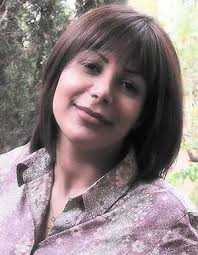
Neda Soltan was not political. She did not vote in the Iranian presidential election on June 12. The young student was appalled, however, by the way that the regime shamelessly rigged the result and reinstalled Mahmoud Ahmadinejad. Ignoring the pleas of her family, she went with her music teacher eight days later to join a huge opposition demonstration in Tehran.


“Even if a bullet goes through my heart it’s not important,” she told Caspian Makan, her fiancĂ©. “What we’re fighting for is more important. When it comes to taking our stolen rights back we should not hesitate. Everyone is responsible. Each person leaves a footprint in this world.”


Ms Soltan, 26, had no idea just how big a footprint she would leave. Hours after leaving home, she was indeed shot, by a government militiaman, as she and other demonstrators chanted: “Death to the dictator.”


Arash Hejazi, a doctor standing near by, remembers her looking down in surprise as blood gushed from her chest. She collapsed. More blood spewed from her mouth. As she lay dying on the pavement, her life ebbing out of her, “I felt she was trying to ask a question. Why?” said Dr Hejazi, who tried to save her life. Why had an election that generated so much excitement ended with a government that claims to champion the highest moral values, the finest Islamic principles, butchering its own youth?
Neda's sacrifice reminds me of the young American patriots who risked their lives by placing their names on the unanimous independence Declaration of 1776, pledging to each other their Lives, their Fortunes, and their sacred Honor.

It is crystal clear to me that we owe our forefathers, who sacrificed everything,  the same pledge.

Tuesday, December 15, 2009

House of Representatives votes to sanction Iran

Some good news tonight from FNC:
The House voted overwhelmingly to implement new sanctions against Iran in retaliation for its saber-rattling over building a nuclear weapons arsenal.
By a 412-12 vote, lawmakers approved legislation that would penalize foreign companies that sell oil to Iran or help the country with its oil-producing capacity. While Iran is a major crude oil producer, its lack of ability to produce enough gasoline and other refined petroleum products is a major economic vulnerability.

With no Senate action on the legislation expected this year, the House vote was for the time being mainly a warning that the United States is ready to act on its own if the Tehran government doesn't respond to current international efforts to prevent Iran from becoming a nuclear power.

Some lawmakers who voted against the bill worried such economic consequences could harm impoverished Iranians.

Deputy Secretary of State James Steinberg, in a letter to the Senate Foreign Relations Committee last week, said the Obama administration was "entering a critical period of intense diplomacy to impose significant international pressure on Iran." Sanctions legislation "might weaken rather than strengthen international unity and support for our efforts," Steinberg's letter said.

House Foreign Affairs Committee Chairman Howard Berman, D-Calif., said Iran has had ample time to respond to President Obama's efforts at engagement. "President Obama has offered Iran an outstretched hand, but regrettably, Iran has not unclenched its fist."

Hitting Iran in one of its weakest areas could be "the last best hope for diplomatically ending Iran's nuclear weapons program," said Rep. Mark Kirk, R-Ill.

U.S. officials say Iran has already stockpiled enough uranium to produce one nuclear weapon, said Rep. Ileana Ros-Lehtinen of Florida, top Republican on the Foreign Affairs Committee. International diplomacy has proved to be a mirage, she said. "we must use the limited time remaining to impose sanctions so painful that they should threaten the Iranian regime's survival."
This bill was first introduced back in April and only came to the forefront this week because of newly leaked intelligence indicating that Iran is testing a neutron initiator.  After the bill was first published, several gasoline suppliers stopped trading with Iran.
Blocking one-third of Iran's gasoline supplies might seem relatively simple. The country's imports come from a fairly small number of firms, including Swiss-Dutch companies Vitol and Trafigura and India's Reliance Industries. New U.S. sanctions would force those companies to choose between doing business in the U.S. or doing business with Iran — a no-brainer for most firms. "They have bigger fish to fry [than Iran]," says Mark Fitzpatrick, a former State Department official and now director of Nuclear Nonproliferation at the International Institute for Strategic Studies in London. "They all have bigger markets elsewhere, including in the U.S." Indeed, even talk of a refined-petroleum blockade convinced British Petroleum to halt its exports to Iran last year. Oil analysts believe Reliance has suspended sales to Iran too.

Geopolitical consultancy Stratfor believes that the delay in congressional action has given Iran an opportunity to stockpile gasoline in anticipation of sanctions:

But that early talk gave Iran time to prepare for new sanctions. Earlier this year, it began importing far more than it was using. Intelligence consultancy Stratfor noted last week that Iran has probably stockpiled at least three months' worth of gasoline. The National Iranian Oil Refining and Distribution Co. estimates that the country has some 15.7 million bbl. of gasoline — about four months' worth — stockpiled in tankers on land and off its Persian Gulf coast. After BP and Reliance halted exports to Iran, Chinese state-owned oil companies filled the gap, supplying about one-third of Iran's gasoline imports as of last month, according to the Financial Times. Lawrence Eagles, head of commodities research at JPMorgan, told the paper last week that Iran was importing 30,000 bbl. to 40,000 bbl. a day from Chinese companies. And Malaysia's state-owned oil company Petronas delivered three shipments of gas to Iran last month, each containing about 93,000 bbl., according to Stratfor.
Iran is probably confident that any meaningful sanctions launched by the U.S. will be short-lived and ineffective.  In light of our recent foreign policy shifts, Israel probably is too.