Showing posts with label Israel. Show all posts

Friday, June 11, 2010

Obama will support anti-Israel resolution at UN next week. Update: White House denies

William Kristol makes a sad, but not unexpected revelation today at The Weekly Standard:
THE WEEKLY STANDARD has learned that senior Obama administration officials have been telling foreign governments that the administration intends to support an effort next week at the United Nations to set up an independent commission, under UN auspices, to investigate Israel's behavior in the Gaza flotilla incident. The White House has apparently shrugged off concerns from elsewhere in the U.S. government that a) this is an extraordinary singling out of Israel, since all kinds of much worse incidents happen around the world without spurring UN investigations; b) that the investigation will be one-sided, focusing entirely on Israeli behavior and not on Turkey or on Hamas; and c) that this sets a terrible precedent for outside investigations of incidents involving U.S. troops or intelligence operatives as we conduct our own war on terror.

While UN Ambassador Susan Rice is reported to have played an important role in pushing for U.S. support of a UN investigation, the decision is, one official stressed, of course the president's. The government of Israel has been consulting with the U.S. government on its own Israeli investigative panel, to be led by a retired supreme court justice, that would include respected international participants, including one from the U.S. But the Obama administration is reportedly saying that such a “kosher panel” is not good enough to satisfy the international community, or the Obama White House.
The outcome of any UN investigation of Israel cannot be in doubt.  It will be a reprise of the shameful Goldstone Report of 2009.  The Obama administration has decimated 62 years of goodwill with the only democracy in the Middle East in less than 18 months.

Update:  Ben Smith at Politico is reporting that the White House is sharply denying Kristol's claim.  Stay tuned.

Sunday, June 6, 2010

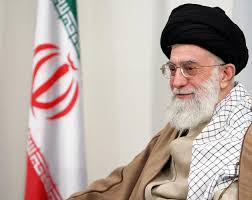
Khamenei: Iran ready to escort Gaza blockade-runners

Reuters is reporting that Iran is ready to provide military escorts to ships trying to break Israel's Mediterranean blockade of Gaza:
Iran's elite Revolutionary Guards are ready to provide a military escort to cargo ships trying to break Israel's blockade of Gaza, a representative of Supreme Leader Ayatollah Ali Khamenei said on Sunday.

"Iran's navy forces are ready to escort the peace flotilla to Gaza with all their powers and capabilities," Ali Shirazi, Khamenei's representative inside the Revolutionary Guards, was quoted as saying by the semi-official Mehr news agency.

Any intervention by the Iranian military would be considered highly provocative by Israel which accuses Iran of supplying weapons to Hamas, the Islamist movement which rules Gaza.

The Guards, with their own navy, air force and command structure separate from the regular armed forces, are seen as fiercely loyal to the values of the Islamic Republic.

"If the Supreme Leader issues an order for this then the Revolutionary Guard naval forces will do their best to secure the ships," Shirazi said. "It is Iran's duty to defend the innocent people of Gaza."

Last Monday Israeli troops killed nine activists on board one ship in a convoy trying to deliver aid to Gaza, sparking international outrage, especially in Muslim countries.

Another ship was boarded on Saturday and pro-Palestinian activists have promised more as they challenge the blockade imposed four years ago with the stated aim of stopping arms getting to Hamas.

Prime Minister Benjamin Netanyahu said Israel will continue to stop ships reaching the shore and creating "an Iranian port in Gaza", a reference to Iran's support for Hamas.
Moments ago, on Fox News Sunday, Chris Wallace asked Israel's Amabassador to the U.S., Dr. Michael B. Oren, what his country's response would be to ships approaching Gaza with Iranian escorts.  Oren said that Israel would defend her 7.5 million citizens by any means necessary.

Update: Reuters has corrected its original report to clarify that reference in paragraph 2 is to Revolutionary Guards naval forces.

Friday, May 21, 2010

Obama: Missile defense for Iran, but not for our allies

In a desperate attempt to get something approved by the U.N. Security Council on Iranian nuclear proliferation, the Obama administration has agreed to a loophole that former U.N. Ambassador John Bolton says is "big enough to drive a truck through:"
The Obama administration on Friday lifted sanctions against four Russian entities involved in illicit weapons trade with Iran and Syria since 1999, and acknowledged exempting a Russian-Iranian missile deal from a U.N. draft resolution banning most missile sales to Iran.

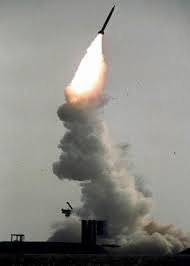
The move comes just three days after the U.S., Russia and other key powers reached agreement on a draft resolution sanctioning Iran for violating U.N. demands to halt its uranium enrichment program. The draft includes a loophole that would exempt a 2005 Russian deal, valued at hundreds of millions of dollars, to sell Tehran five S-300 surface-to-air missile systems.

The removal of the four entities, which was recorded in Friday's Federal Register, suggested that the United States engaged in some last-minute bargaining to ensure Moscow's support for sanctions. The companies include Russia's state arms exporter, Rosoboronexport, which was sanctioned for its dealing with Iran in 2006 and 2008, and Moscow Aviation Institute, one of three entities sanctioned in 1999 for aiding Iran's development of ballistic missiles and nuclear weapons.
It's official.  The Russians say "jump" and the Obama administration asks, "how high?"  Quite a reset, I'd say.

Gone are the days when President Ronald Reagan stood at the Brandenburg Gate in Berlin and implored Mr. Gorbachev to "Tear down this wall!"  Now we find ourselves in an era in which the President of the United States reneges on our government's commitment to provide missile defense to our allies in Eastern Europe (Poland and the Czech Republic) at the behest of the Russians.  Then, less than a year later, we agree to a U.N. resolution which expressly permits the Russians to deliver surface-air-missile systems to Iran.  You know, the S-300's that will be positioned to neutralize any Israeli or U.S. (just kidding) attack on Iran's nuclear facilities.

It's understandable that the "U.S official" who issued this statement today in defense of the U.N. agreement prefers to remain anomymous:
"It's worth mentioning that Russia has not transferred the S-300s," the official said. "That's not to say they couldn't do it tomorrow. But they haven't done it."
Pathetic.

Monday, May 3, 2010

News not fit to print

Joseph Shatton at The American Spectator wants you to know about some big news that the mainstream media has not seen fit to print:
If the governments of Israel and Jordan joined forces to save the life of a three-year old Palestinian child -- and if the three-year old child happened to be the daughter of a top Hamas official -- that would be big news, right? It would be covered by all the major American newspapers, right? Oprah might even talk about it, right?

If you answered "right" to any of the above, dear reader, you are living on another planet.

Here is a brief summary of the story, as reported in the April 27 issue of the Hebrew-language weekly, Sha'ar LaMathil:

The young daughter of Fathi Hamad, one of the heads of Hamas and its government in the Gaza Strip, was in urgent need of medical attention in a Jordanian hospital. King Abdallah of Jordan requested the Prime Minister and Defense Minister to facilitate the girl's transfer to a hospital in Amman.

Israel acceded to the request. A Red Cross ambulance transferred the girl from a hospital in Gaza to Barzilai Hospital in Ashkelon, and from there a Jordanian helicopter transferred her to Amman. The heads of Hamas ordered all the Gaza Strip media not to publish the story.
This is just a bare-bones version of what happened. A more detailed account might have mentioned that the southern Israeli city of Ashkelon was a frequent target of Hamas rocket attacks; that the child received emergency medical treatment at Barzilai Hospital to stabilize her condition before being flown on to Amman; that she is just one of hundreds of Gazans who receive medical care in Israel; that her father, Hamas' Interior Minister and a leading advocate of suicide bombing, publicly thanked King Abdallah, but omitted any mention of Israel; and that the Jordanian press also left out Israel's role. But let's not get bogged down in petty details.
In lieu of acknowledgement or god-forbid thanks, Hamas issued an animated video that threatens the life of Staff Sgt. Gilad Shalit, an Israeli soldier who has been held captive in Gaza since 2006, when he was seized in Israel, near its border with the Palestinian territory.  From The New York Times:
The video, which was posted on the Web site of the Hamas Qassam Brigades and on YouTube, uses the real voice of the captured solider — from a previously released “proof of life” video — over a computer-generated animation that shows his father wandering forlorn past billboards showing statements from Israeli leaders promising to free his son.

At the end of the video, the elder Mr. Shalit is shown witnessing the return of his son’s coffin — before waking with a scream to realize that this scene had just been a bad dream and his son is still alive. The video then ends with the words, “There is still hope.”
Oh, by the way, the Times did see fit to publish the English-version of the Hamas video on its website.

Sunday, April 18, 2010

Leaked Gates memo: U.S. lacks policy to deal with Iran

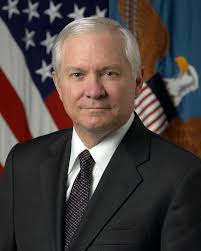
In what should be considered a news bombshell, The New York Times is reporting that Secretary of Defense Robert Gates wrote a top secret memorandum to top White House officials warning that the U.S. lacks a long-range policy to deal with Iran's quest for nuclear capability:
Several officials said the highly classified analysis, written in January to President Obama’s national security adviser, Gen. James L. Jones, came in the midst of an intensifying effort inside the Pentagon, the White House and the intelligence agencies to develop new options for Mr. Obama. They include a set of military alternatives, still under development, to be considered should diplomacy and sanctions fail to force Iran to change course.

Officials familiar with the memo’s contents would describe only portions dealing with strategy and policy, and not sections that apparently dealt with secret operations against Iran, or how to deal with Persian Gulf allies.

One senior official, who like others spoke on the condition of anonymity because of the sensitive nature of the memo, described the document as “a wake-up call.” But White House officials dispute that view, insisting that for 15 months they had been conducting detailed planning for many possible outcomes regarding Iran’s nuclear program.
It should come as no surprise that the Times is willing to leak classified information, but he timing of the leak -the memo is three months old- to coincide with the gap between the Won's nuclear summit and the Sunday news shows is quite interesting.  Allahpundit muses:
Exit question: Why was this leaked now? The memo was written in January but only today are “government officials” finally whispering about it to the Times. Normally I’d assume that it was leaked by the White House itself in yet another naive attempt to pressure allied powers about the severity of the threat, but the story’s simply too embarrassing to Obama. Presumably the leakers are insiders who are worried that, three months later, we’re still not taking the prospect of an Iranian bomb seriously enough. We will be tomorrow.
Whatever the source and motivation for the leak, it sends a clear message to Israel (just in case Obama's arrogant  and dismissive treatment of Prime Minister Benjamin Netanyahu didn't do the trick) that any meaningful effort to stop Iran's nuclear march rests on the Jewish state alone.

Wednesday, March 31, 2010

US test fires Trident missile in Saudi Arabia

From The Washington Post:
The United States test-fired a submarine-launched ballistic missile capable of carrying nuclear warheads during a joint military exercise Wednesday with Saudi Arabia, a Western military official said.

The Trident missile launch was carried out in the kingdom, the official said, but he would not give a precise location. He spoke on condition of anonymity because of the sensitivity of the issue.

The U.S. has been strengthening missile defenses in allied Arab nations in the Gulf to help counter any potential missile strike from Iran. Like its nuclear work, Iran's missile program is of top concern to Washington and Arab nations wary of Tehran's growing influence in the region.

A defense official in Washington confirmed the missile launch on condition of anonymity because he was not authorized to speak on the record. He said, however, that it took place late last week and was part of a demonstration.
Saudi Arabia has long warned that a nuclear Iran would result in a nuclear arms race in the Middle East.  In addition to "rattling the biggest sabre of all in Iran's face" as Closing Velocity puts it, the U.S. launch of a Trident missile in a joint drill with the Saudis suggests that both countries believe that a nuclear Iran is inevitable.  In an interview with Fox News this morning, former U.S. Ambassador to the U.N. John Bolton reiterated his conclusions that any sanctions effort against Iran is doomed to fail and that the Obama administration is prepared to accept a nuclear Iran.

Danielle Pletka from the American Enterprise Institute agrees that sanctions will fail and ponders what comes next:
Some Gulf states (including, some say, Qatar, which hosts American forces and equipment) have begun to openly propitiate the Tehran regime, anticipating its regional dominance once it is armed with nuclear weapons. Others, not reassured by Clinton drop-bys and ineffectual back-patting, have begun to explore their own nuclear option. Repeated rumors that Saudi Arabia is negotiating to buy an off-the-shelf Pakistani nuclear weapon should not be ignored.

What of Israel? The mess of U.S.-Israel relations has ironically only bolstered the fears of Arab governments that the current U.S. administration is a feckless ally. If the U.S. won't stand by Israel, by whom will it stand? Conversely, our adversaries view both the distancing from Israel and the debacle of Iran policy as evidence of American retreat. All the ingredients of a regional powder keg are in place.

Finally, there is the military option. Israeli Prime Minister Bibi Netanyahu left Washington last week befuddled by Mr. Obama's intentions on Iran. Should Israel decide to attack Iran, the shock waves will not leave the U.S. unscathed. Of course, Mr. Obama could decide that we must take action. But no one, Iran included, believes he will take action.

And so, as the failure of Mr. Obama's Iran policy becomes manifest to all but the president, we drift toward war. The only questions remaining, one Washington politico tells me, are who starts it, and how it ends.

Sunday, March 28, 2010

John Bolton: Obama resigned to a nuclear Iran?


In an interview with Army Radio, former U.S. ambassador to the U.N. John Bolton expressed his concern that President Obama is willing to accept a nuclear Iran.  From The Jerusalem Post:
Former US ambassador to the UN John Bolton expressed concern Sunday that Washington was coming to terms with a nuclear Iran.

“I very much worry the Obama administration is willing to accept a nuclear Iran, that's why there's this extraordinary pressure on Israel not to attack in Iran,” Bolton told Army Radio.

The former envoy claimed that this pressure was the focus of last week's meetings in Washington between Prime Minister Binyamin Netanyhau and US officials, including President Barack Obama.

Bolton said that the Obama administration had embraced the view, prevalent in Europe, that the Israeli-Palestinian conflict was the key to the resolution of all other conflicts throughout the Middle East, including the Iranian conflict.

He added that the rift in US-Israel relations stemmed from a fundamental difference in the understanding of the Middle East and Israel's role in the Middle East, and is not really about east Jerusalem at all.

Bolton said that the treatment Netanyahu received during his visit "should tell the people of Israel how difficult it's going to be dealing with Washington for the next couple of years."
After repeated toothless warnings, meaningless deadlines, and warm and fuzzy New Year video greetings, Americans can similarly infer how President Obama will be dealing with Iran for the next couple of years.  By then as Ambassador Bolton predicts, our next president will likely be dealing with a nuclear Iran.

Tuesday, March 23, 2010

Netanyahu: "Jerusalem is not a settlement. It is our capital."

In advance of his meeting today with President Obama, Israel Prime Minister Benjamin Netanyahu made it clear in his AIPAC speech yesterday that his country will continue to build housing in East Jerusalem.  From Fox News:
Netanyahu’s address at AIPAC Monday night sounded more like a line in the sand, rather than an attempt to work with the United States. “Jerusalem is not a settlement. It is our capital,” Netanyahu said. "Everyone knows that these neighborhoods will be part of Israel in any peace settlement. Therefore, building in them in no way precludes the possibility of a two state solution." His comments came hours after Secretary of State Clinton told the same group that a building freeze in Israel would greatly increase security for that country. And while Netanyahu said Israel has no intention of governing Palestinians, and his country is “unjustly accused of not wanting peace with the Palestinians,” Netanyahu said nothing could be further from the truth.

Republican Whip Eric Cantor (VA), the only Jewish Republican in Congress, met with Netanyahu on Tuesday and says the attempt to fan the flames on settlements is not helping the overall peace situation in the region. “There are broader issues at stake here and the construction issue in Jerusalem is a red herring,” Cantor told Fox News’ White House Correspondent Wendell Goler. “This is not what these peace talks should be about, these peace talks should be about what could create a lasting and enduring peace.”

But Cantor says, despite controversy over the settlements, Netanyahu was not unreasonable in his meeting with lawmakers about the issue of Jerusalem and said that it is understood there’s a difference between building in Israel and building in Jerusalem. “The issue of construction of Jerusalem is separate from the issue of settlement construction. This is a non-issue, it is not linked to the greater security in the region, and I think that it is an attempt by some in the region to continue to fan the flames, that is not helpful at all in terms of driving peace,” Cantor said.
President Obama exacted his punishment on the Prime Minister by refusing to appear with him in the customary press photo op during his White House visit today.  He was further punished when he had to appear at the Capitol with Senators John Kerry and Charles Schumer.  Enough is enough.

The video of Netanyahu's AIPAC speech is included in its entirety in four parts below.  It's a very good lesson in the history of the Jewish state and he is an excellent speaker.  I encourage you to take the time to listen.


Friday, March 19, 2010

U.S. foreign policy hits keep coming

During Vice President Biden's recent visit to Israel, an ill-timed announcement was made regarding future Israeli settlements in East Jerusalem.  Biden made Prime Minister Netanyahu and his wife wait 90 minutes before he showed up for a state dinner.  Then Secretary of State Clinton escalated the whole gaffe with a scathing rebuke of Israel.

Yesterday, the Russians marked the occasion of the U.S. Secretary of State's visit to Moscow by announcing that it would assist Iran in the completion of its nuclear reactor in Bushehr in the next few months.  Then today, Russia's Prime Minister Putin spent six minutes chastising the U.S. for complaints spanning the last 26 years.  From Jake Tapper at ABC News:
ABC's Alexander Marquardt reports: When reporters traveling with Secretary of State Hillary Clinton in Moscow were informed that a last-minute meeting with Russia's Prime Minister Valdimir Putin had been added to the schedule, they were told they would only get to see a few seconds of handshakes before being ushered out.

Instead, with cameras rolling, they watched Putin spend six minutes rattling off a number of complaints he has with the United States.

Trade with the US has slowed during the financial crisis, he complained, Russian companies have been slapped with US sanctions and Russia is having trouble joining the World Trade Organization.

He also singled out the 1974 Jackson-Vanik amendment, as he has in the past, as evidence that the US is not fully encouraging business with Russia. (The amendment restricts trade with countries that limit emigration, as the USSR did with Jews.)

"If we continue to work together, we can move beyond the problems to greater opportunities," Clinton replied, according to the Washington Post, after emphasizing some of the accomplishments the two countries had recently achieved. The report added that Clinton was “unfazed by the blunt lecture.”

Reporters were surprised at the length of Putin’s list of issues and the fact that he did it in front of the Russian and American press corps, a pool reporter noted.
Secretary of State Clinton's response to the obvious double slap from Russia:  predictable silence.

Friday, February 26, 2010

Iran and Syria mock Secretary of State Clinton; Obama yawns

In a recent post, I wrote about the diplomatic stiff-arm response the Obama administration had received from Syria after it lifted travel restrictions and nominated an ambassador to the country for the first time since 2005.  It is actually much worse than I thought.  The Guardian (UK) paints a picture of utter contempt and mockery for the United States, and more specifically, Secretary of State Hillary Clinton:
Iran and Syria put on show of unity in alliance Clinton finds 'troubling'Ahmadinejad and Assad accuse the Americans of trying to dominate Middle East

The presidents of Syria and Iran put on show of unity Link to this video Iran and Syria put on a show of defiant unity today, scorning US efforts to break up their alliance and warning Israel not to risk attacking either of them.

Mahmoud Ahmadinejad, the Iranian president, flew to Damascus for talks with Bashar al-Assad days after the US appointed an ambassador to Syria after a five-year gap – a move seen by some as the start of a diplomatic thaw.

"The Americans want to dominate the region but they feel Iran and Syria are preventing that," Ahmadinejad said during a press conference with Assad.

"We tell them that instead of interfering in the region's affairs to pack their things and leave. If the Zionist entity wants to repeats its past errors, its death will be inevitable."

Assad made clear that Syria would not distance itself from Iran, its ally since the 1979 Islamic Revolution. "We hope that others don't give us lessons about our region and our history," he said. "We are the ones who decide ... and we know our interests. We thank them for their advice. I find it strange how they talk about Middle East stability and at the same time talk about dividing two countries."

Hillary Clinton, the US secretary of state, said yesterday that the US was troubled by Syria's relationship with Iran and characterised the appointment of an ambassador as a "slight opening". Ties between Washington and Damascus were downgraded after the murder of the former Lebanese prime minister, Rafiq al-Hariri, in 2005 was blamed on Syria.

Al-Jazeera reported that Ahmadinejad also met Khaled Mash'al, the Damascus-based leader of the Palestinian movement Hamas, and Ramadan Shallah of Islamic Jihad, both of which are supported by Tehran. Links between Hamas and Iran have been highlighted by the killing of the Hamas official Mahmoud al-Mabhouh, by an alleged Israeli hit squad in Dubai.

Two years ago the military leader of Lebanon's Hizbullah, Imad Mughniyeh, was assassinated in Damascus in an attack that was also blamed on Israel's secret service, the Mossad. It was not clear whether Ahmadinejad was also meeting Hassan Nasrallah, the Hizbullah leader.

Syria and Iran announced they were cancelling visa restrictions between their countries. "We must have understood Clinton wrong because of bad translation or our limited understanding, so we signed the agreement to cancel the visas," Assad said. (emphasis mine)
I don't think this is what President Obama envisioned when he made his inaugural address in January of 2009:
To the Muslim world, we seek a new way forward, based on mutual interest and mutual respect. To those leaders around the globe who seek to sow conflict, or blame their society's ills on the West--know that your people will judge you on what you can build, not what you destroy. To those who cling to power through corruption and deceit and the silencing of dissent, know that you are on the wrong side of history; but that we will extend a hand if you are willing to unclench your fist.
The U.S. has extended its hand to Syria and received the equivalent of a middle finger in response.  Call me old fashioned, but I don't think any U.S. President worth his salt would allow his Secretary of State, a former First Lady and U.S. Senator to be mocked in this way without a strong response.  It's time to roll up the welcome mat to Syria, recall the new ambassador before he gets to Damascus, reinstate the travel advisory and impose a gasoline embargo on Iran.

To delay, is to concede nuclear nation status to a regime devoted to the destruction of Israel and the United States of America.

Is Tehran deliberately inviting an air strike?

The New York Times is reporting another puzzle in the Iranian nuclear saga:
When Iran was caught last September building a secret, underground nuclear enrichment plant at a military base near the city of Qum, the country’s leaders insisted they had no other choice. With its nuclear facilities under constant threat of attack, they said, only a fool would leave them out in the open.

So imagine the surprise of international inspectors almost two weeks ago when they watched as Iran moved nearly its entire stockpile of low-enriched nuclear fuel to an above-ground plant. It was as if, one official noted, a bulls-eye had been painted on it.

Why take such a huge risk?

That mystery is the subject of fervent debate in the White House and the C.I.A., and among European, Israeli and Arab officials trying to decode Iran’s intentions. The theories run from the bizarre to the mundane: Under one, Iran is actually taunting the Israelis to strike first. Under another, it is simply escalating the confrontation with the West to win further concessions in negotiations that have dragged on four months. The simplest explanation is that Iran has run short of suitable storage containers for radioactive fuel, so it had to move everything.
Julian Borger at The Guardian (UK) has more:
They were many striking elements in the new International Atomic Energy Agency report on Iran, not least its blunt language on the "possible military dimensions" of the Iranian programme. But the strangest part of it was this:

On 14 February 2010, Iran, in the presence of Agency inspectors, moved approximately 1950 kg of low enriched UF6 from FEP to the PFEP feed station. The Agency inspectors sealed the cylinder containing the material to the feed station.
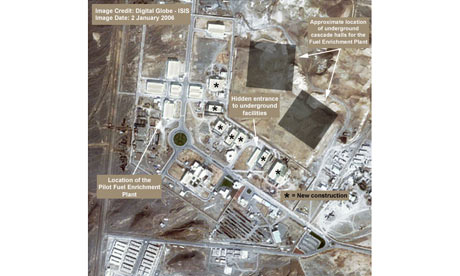
That means that Iran took 94% of its entire stock of low enriched uranium (LEU) from the huge underground tunnels and chambers of its Fuel Enrichment Plant at Natanz and brought it to the surface, to its Pilot Fuel Enrichment Plant (see satellite picture above), which is currently producing 20% enriched uranium, and which is clearly visible from the air.

This stunning move is both provocative and risky. It is provocative because it signals an intention to enrich its LEU from its current level of purity of 3.5% U-235 up to 20%, which is most of the way, in engineering terms, to making weapons-grade material. [Arms Control Wonk has a good explanation of why in the world of uranium enrichment, 20 is closer to 90 than it is to 3.5]

Even if Iran had the technology to turn the 20% uranium into fuel rods for its medical research reactor in Tehran, it does not need two tonnes of LEU. According to ISIS, that much LEU would render about 200kg of 20% uranium. The Tehran Research Reactor needs no more than 18.4 kg annually.

The move is risky because it involves shifting Iran's crown jewels, its 2-tonne LEU stockpile, from subterranean safety where it was invisible to Israeli air force targeteers, to a clearly defined location that might as well have a bullseye painted on the roof.

Why would a regime that is normally so paranoid about its LEU leave itself so vulnerable? One possible explanation, being mused on by British government analysts, is that the regime is deliberately inviting an Israeli air strike with the aim of creating a crisis, and using that crisis to crush dissent even more brutally than it is doing currently.

It is a terrifying idea, but not the only possible explanation. It may be, as David Albright at ISIS suggests, that the Natanz technicians were in a hurry to fulfil President Ahmadinejad's orders to enrich to 20%, and it was quicker to drive the whole cask of enriched uranium hexafluoride up the ramp to the pilot plant, than try to decant it into small containers.

A third possibility is that Iran is playing poker, bringing out its trump in an attempt to get the international community to fold, and agree to supply Iran with fuel rods to the TRR without Iran having to export its LEU in advance as it initially agreed to do in Geneva last October. Tehran may believe that the danger of an Israeli air strike is minimal because the repercussions in the Gulf would be so devastating.

All three versions are all quite plausible, and they are all extremely dangerous. Israel may not be considering a strike imminently and appears content for the time being to explore how far sanctions will go, but that position may not last. The Israelis may consider 2010 a brief window of opportunity, following the exposure of the secret enrichment plant near Qom, and before Iran gets very far with the ten new ones it says it wants to build.
This report was issued on February 18, but Iran's curious relocation of its low-enriched uranium stores has received little coverage in the MSM.  You can read the IAEA Iran report here (pdf).

Wednesday, February 10, 2010

Pray for the people of Iran

The Wall Street Journal reports that Iranian officials are mobilizing forces in advance of Thursday's anniversary of the Islamic Republic in an attempt to quash antigovernment protests:
On Wednesday, semi-official news services and opposition Web sites reported last-minute attempts by police and plain-clothes militia to suppress antigovernment demonstrations.

Basij militia took over a large bus and taxi station in western Tehran, shutting it down and draping a banner over the terminal stating the area will serve as headquarters for security forces.

Iranian Web sites said the bus terminal would also be used by security forces coming in from the provinces to help suppress protests in the capital.

The government typically buses in large numbers of government supporters from outlying regions to Tehran to participate in rallies.

Meanwhile, human-rights groups in Iran reported late Wednesday that 19 mothers whose children were killed in previous post-election unrest, had been detained by authorities.

Iranians have reported widespread service disruptions to Internet and text messaging services, though mobile phones appeared to be operating normally Wednesday.

Iran's telecommunications agency announced what it described as a permanent suspension of Google Inc.'s email services, saying instead that a national email service for Iranian citizens would soon be rolled out. It wasn't clear late Wednesday what effect the order had on Google's email services in Iran.
Today the U.S. Treasury Department announced new sanctions on Iran, freezing the assets of an individual and four companies affiliated with Iran's Islamic Revolutionary Guard Corps.  The affected individual is Islamic Revolutionary Guard General Rostam Qasemi.  The affected companies are: Fater Engineering Instituten Imensazen Consultant Engineers Institute, Makin Institute and Rahab Institute.

Iran's embassies in Paris and Copenhagen have been the object of green paint attacks, an apparent protest of the Iranian regime. Taiwan News explains:
Green is a symbol for the reform movement in Iran and for opposition leader Mir Hossein Mousavi. His backers claim he was the rightful winner in June presidential elections, not victorious incumbent President Mahmoud Ahmadinejad.
Israel Prime Minister Benjamin Netanyahu yesterday called for "crippling sanctions" against Iran:
"Iran is racing forward to produce nuclear weapons," Prime Minister Benjamin Netanyahu told a group of European diplomats yesterday, calling for tough and immediate action by the international community as Iran moved ahead with plans to enrich uranium to the 20-per-cent level.

"This means not moderate sanctions, or watered-down sanctions," Mr. Netanyahu said. "This means crippling sanctions and these sanctions must be applied right now.
Ahmadinejad has promised a "telling blow to global arrogance" tomorrow.

A perfect storm is brewing.  Say a prayer for the people of Iran.

Monday, January 18, 2010

Israel's disproportionate response


If you google the words "Israel disproportionate response" you will get in excess of 14 million hits.  The vast majority of the results will describe how Israel's response to attacks on its people and its territory has been disproportionate to the attack or threat to which they respond.  Today, Peggy Shapiro at American Thinker describes a disproportionate response of Israel that is unlikely to find its way to your evening news:
In the midst of the tragedy and chaos in the Haitian capital, Israeli doctors, part of IsraAID -F.I.R.S.T. (the Israel Forum for International Aid), delivered a healthy baby boy in an IDF field hospital. When the baby's grateful mother, Gubilande Jean Michel saw her newborn son, alive and well, she named him Israel in gratitude to the people and nation who brought her this blessing.


Little Israel is one of the hundreds who have been saved by Israeli doctors or rescue teams. A search and rescue team from the ZAKA Israel's International Rescue Unit pulled eight Haitian college students from a collapsed eight-story university building. Despite its small size, Israel sent a large contingent of highly-trained aid workers to quake-stricken Haiti. Two jumbo jets carrying more than 220 doctors, nurses, civil engineers, and other Israeli army personnel, including a rescue team and field hospital, were among the first rescue teams to arrive in Haiti. In fact, they were the first foreign backup team to set up medical treatment at the partially collapsed main hospital in Port-au-Prince. Yigal Palmor, Israel's Foreign Ministry spokesman said, "It's a large delegation and we're prepared to send more."


The international agencies that condemn Israel for its "disproportionate response" when it is attacked are not mentioning Israel's disproportionate response to human suffering. The U.S. has pledged 100 million and sent supplies and personnel. The U.K. pledged $10 million and sent 64 firemen and 8 volunteers.China, a country with a population of 1,325,639,982 compared to Israel's 7.5 million sent 50 rescuers and seven journalists. The 25 Arab League nations sent nothing.


Israel's "disproportionate" response stems from Jewish memory and tradition. Mati Goldstein, head of the ZAKA International Rescue Unit delegation managed described the scene, "Everywhere, the acrid smell of bodies hangs in the air. It's just like the stories we are told of the Holocaust - thousands of bodies everywhere. You have to understand that the situation is true madness, and the more time passes, there are more and more bodies, in numbers that cannot be grasped. It is beyond comprehension." At the start of Sunday's regular Cabinet meeting, Prime Minister Benjamin Netanyahu announced that the Israeli team had already treated hundreds of patients. "I think that this is in the best tradition of the Jewish People; this is the true covenant of the State of Israel and the Jewish People," he said. "This follows operations we have carried out in Kenya and Turkey; despite being a small country, we have responded with a big heart. The fact is, I know, that this was an expression of our Jewish heritage and the Jewish ethic of helping one's fellow. "


In the rubble and suffering of Haiti, Israelis are relentlessly searching for and saving lives. It is this "disproportionate response" that rankles their enemies the most, for it shines a light on their failings.
After further review, it seems my low expectations of the media may have to be revised.  It seems that the swift and effective response of Israel has indeed garnered the attention of some members of the mainstream press.  From Ynet News:
The valiant work of Israel's rescue mission to Haiti has been widely covered in the Israeli press. Now it has earned praise from a surprising source: On Monday, US media broadcast items praising the assistance provided by Israel, and one reporter even sent a letter of thanks to Israeli representatives in New York.


CNN reported that Israel is the only state so far to have sent a field hospital equipped with all that is required for surgical operations. Doctors from various missions send patients requiring surgery to Israel's makeshift hospital, particularly those whose condition is critical, the news network said.

According to the report, other field hospitals contain no more than stretcher beds and medical teams who administer first aid, and they are not prepared for complex surgery.

Resourcefulness saves baby's life


ABC praised the Israeli mission which had assisted a birth using a complicated procedure. The network's reporter, himself a trained doctor, came across a woman on the point of giving birth. First he tried to assist, but when he got into difficulties he remembered the Israeli field hospital, called the Israeli consulate in New York and was directed to the IDF camp.


"I understood that they were looking for the Israeli mission," said Joel Lion, Israeli consulate spokesman. "I called the military attaché in Washington to get the address of the mission… then, via Blackberry, I managed to get the coordinates and direct them there."


When they arrived at the hospital, the young woman was taken in and eight hours later a healthy baby was born.


ABC reported extensively on the story, and even sent a letter of thanks to the Israeli representative in New York. "They were very moving moments. It was amazing to be party to saving life and bringing a baby into the world. And most amazing was that it was all directed via a cell phone," said Lion. "We will pass on the expressions of thanks to the doctors and the wonderful staff at the Israeli field hospital in Haiti."
Let there be no mistake.  Israel's swift, efficient and effective response to this historic disaster was not designed to impress you or anyone else of this earth.  Israel has neither sought nor expected accolades or approval from the east or the west since its inception in 1948.  Indeed, as Shapiro asserts, Israel responds according to Jewish memory and tradition.  I would only add that they also clearly keep faith with their covenenant with God.

Tuesday, January 5, 2010

Michael Yon detained at Seattle-Tacoma International Airport


Acclaimed independent war correspondent and photojournalist Michael Yon was handcuffed yesterday at Seattle-Tacoma International Airport for refusing to disclose his annual income to Customs personnel.  If you don't know who Michael Yon is, you really should.  He has single-handedly produced some of the best eye-witness coverage of the wars in Iraq and Afghanistan. From his website:
Michael Yon is a former Green Beret, native of Winter Haven, Fl. who has been reporting from Iraq and Afghanistan since December 2004. No other reporter has spent as much time with combat troops in these two wars. Michael’s dispatches from the frontlines have earned him the reputation as the premier independent combat journalist of his generation. His work has been featured on “Good Morning America,” The Wall Street Journal, The New York Times, CNN, ABC, FOX, as well as hundreds of other major media outlets all around the world.
From an exclusive interview with Big Government:
Award winning war correspondent Michael Yon was detained and handcuffed at Seattle-Tacoma International Airport Yesterday by Transportation Security Administration (TSA) personnel.


Yon was returning to the United States from Hong Kong to visit family when TSA officials stopped him during a routine security checkpoint. “Officials asked me what was in my bag—nothing wrong with this question,” Yon said in an interview with BigGovernment.com. “I told them it was normal stuff, clothes and toothbrushes.”


At this point the TSA officials escorted Yon to a designated screening area where they examined the contents of his bag. “Then they asked me how much money I make,” Yon said. Yon suggested to the TSA officials that the question was inappropriate and unrelated to transportation security. The award-winning blogger noted another TSA officer approached Yon: “he asked who do I work for.” ”I did not answer the question which clearly was upsetting to the TSA officers.”
From Michael's Facebook page:
When they handcuffed me, I said that no country has ever treated me so badly. Not China. Not Vietnam. Not Afghanistan. Definitely not Singapore or India or Nepal or Germany, not Brunei, not Indonesia, or Malaysia, or Kuwait or Qatar or United Arab Emirates. No county has treated me with the disrespect can that can be expected from our border bullies.
Last week, I watched two interviews on Fox News with Isaac Yeffet, former head of El Al Airlines (and retired officer in the Israeli Secret Service).  He observed that many screeners at TSA are unqualified and untrained.  He stated that the key to airline security is qualified, well-educated screeners that are proficient in at least two languages.  He also said that airline security is a 'holy mission.'

The harassment of Michael Yon is a stark confirmation of  Mr. Yeffet's observations, and the failure of our government to heed the lessons of 9/11.

I have followed and supported Micheal Yon's reporting since 2005.  You can view what I believe is his most heart-wrenching photo here.

Update:  I have corrected this post after reading Michael's clarification on Facebook.  He was handcuffed by Customs (CBP) personnel, not TSA.

Tuesday, December 29, 2009

Chutzpah! U.S. demands Israel explain terrorists' deaths


Aaron Klein at World Net Daily reports that the Obama administration is demanding that Israel explain an IDF operation in which three terrorists were killed last weekend:
"This is sheer chutzpah and is an unprecedented and strange request," said an Israeli security official familiar with the U.S. request.


Over the weekend, three terrorist suspects, all members of Palestinian Authority President Mahmoud Abbas' Fatah organization, were killed in an Israeli raid intended to arrest the suspects upon information they killed an Israeli civilian last Thursday. The three Fatah terrorists were heavily armed and refused to surrender to the Israeli soldiers, according to the Israel Defense Forces.


Israel had information that all three were responsible for the terrorist shooting of Meir Hai, a 40-year-old West Bank Jewish teacher and father of seven, who was murdered on a road near his home in an area where Israel had recently lifted a roadblock restricting Palestinian movement.


A spokesperson for the Israel Defense Forces told WND yesterday that ballistic tests carried out on a weapon found inside the terrorists' apartment later confirmed the gun was used in the shooting of Hai.
This unusual request by the Obama administration prompted an indignant Op-Ed piece by Dan Diker in the Jersusalem Post which suggests that it is the U.S. that should be doing the explaining:
As a rule, the US has not asked Israel for public clarifications on antiterror operations. Clearly, close communications are important. There are multiple security and intelligence channels between Israel and its closest ally that have been and should be used to handle these types of security queries. The Israeli Embassy in Washington, the US Embassy in Tel Aviv, the US consulate in Jerusalem, military attaches and representatives of respective intelligence agencies are appropriate addresses.


But in this extraordinary case, the US demanded a public clarification on behalf of the PA. This clearly represents heightened US sensitivity to Palestinian protests over the IDF's "unjust" incursion into Area A of Judea and Samaria/the West Bank, where the PA has overall security responsibility, to net the Fatah-associated terror cell that resulted in its elimination.

THIS IS where it seems more appropriate that the US issue clarifications to Israel. At least one of the Aksa Brigades commanders - Annan Sabuh, who was found with two M16 automatic rifles and two other firearms - had been part of the amnesty program for former Fatah-affiliated terror group commanders and operatives that was predicated on turning in all weapons. The amnesty program was implemented in no small part at the behest of the United States and its security reform program, which began under Lt.-Gen. Keith Dayton in 2005.
Scott Johnson at Powerline seems to agree:
Diker reasonably argues that it is Washington, not Jerusalem, that has some 'splainin' to do. We understand that Diker's column is making a splash in Israeli government circles today. It should also be making a splash in our own government circles, especially in light of the staggering incompetence of our antiterror efforts.
This diplomatic slap at Israel comes on the heels of an incident in the West Bank in which an American consulate car tried to run over an Israeli security guard at a border crossing checkpoint.  Is this what Presidential candidate Senator Obama meant when as he described himself to AIPAC as "a true friend of Israel" and said, "Let me be clear. Israel's security is sacrosanct. It is non-negotiable."

Tuesday, December 15, 2009

House of Representatives votes to sanction Iran

Some good news tonight from FNC:
The House voted overwhelmingly to implement new sanctions against Iran in retaliation for its saber-rattling over building a nuclear weapons arsenal.
By a 412-12 vote, lawmakers approved legislation that would penalize foreign companies that sell oil to Iran or help the country with its oil-producing capacity. While Iran is a major crude oil producer, its lack of ability to produce enough gasoline and other refined petroleum products is a major economic vulnerability.

With no Senate action on the legislation expected this year, the House vote was for the time being mainly a warning that the United States is ready to act on its own if the Tehran government doesn't respond to current international efforts to prevent Iran from becoming a nuclear power.

Some lawmakers who voted against the bill worried such economic consequences could harm impoverished Iranians.

Deputy Secretary of State James Steinberg, in a letter to the Senate Foreign Relations Committee last week, said the Obama administration was "entering a critical period of intense diplomacy to impose significant international pressure on Iran." Sanctions legislation "might weaken rather than strengthen international unity and support for our efforts," Steinberg's letter said.

House Foreign Affairs Committee Chairman Howard Berman, D-Calif., said Iran has had ample time to respond to President Obama's efforts at engagement. "President Obama has offered Iran an outstretched hand, but regrettably, Iran has not unclenched its fist."

Hitting Iran in one of its weakest areas could be "the last best hope for diplomatically ending Iran's nuclear weapons program," said Rep. Mark Kirk, R-Ill.

U.S. officials say Iran has already stockpiled enough uranium to produce one nuclear weapon, said Rep. Ileana Ros-Lehtinen of Florida, top Republican on the Foreign Affairs Committee. International diplomacy has proved to be a mirage, she said. "we must use the limited time remaining to impose sanctions so painful that they should threaten the Iranian regime's survival."
This bill was first introduced back in April and only came to the forefront this week because of newly leaked intelligence indicating that Iran is testing a neutron initiator.  After the bill was first published, several gasoline suppliers stopped trading with Iran.
Blocking one-third of Iran's gasoline supplies might seem relatively simple. The country's imports come from a fairly small number of firms, including Swiss-Dutch companies Vitol and Trafigura and India's Reliance Industries. New U.S. sanctions would force those companies to choose between doing business in the U.S. or doing business with Iran — a no-brainer for most firms. "They have bigger fish to fry [than Iran]," says Mark Fitzpatrick, a former State Department official and now director of Nuclear Nonproliferation at the International Institute for Strategic Studies in London. "They all have bigger markets elsewhere, including in the U.S." Indeed, even talk of a refined-petroleum blockade convinced British Petroleum to halt its exports to Iran last year. Oil analysts believe Reliance has suspended sales to Iran too.

Geopolitical consultancy Stratfor believes that the delay in congressional action has given Iran an opportunity to stockpile gasoline in anticipation of sanctions:

But that early talk gave Iran time to prepare for new sanctions. Earlier this year, it began importing far more than it was using. Intelligence consultancy Stratfor noted last week that Iran has probably stockpiled at least three months' worth of gasoline. The National Iranian Oil Refining and Distribution Co. estimates that the country has some 15.7 million bbl. of gasoline — about four months' worth — stockpiled in tankers on land and off its Persian Gulf coast. After BP and Reliance halted exports to Iran, Chinese state-owned oil companies filled the gap, supplying about one-third of Iran's gasoline imports as of last month, according to the Financial Times. Lawrence Eagles, head of commodities research at JPMorgan, told the paper last week that Iran was importing 30,000 bbl. to 40,000 bbl. a day from Chinese companies. And Malaysia's state-owned oil company Petronas delivered three shipments of gas to Iran last month, each containing about 93,000 bbl., according to Stratfor.
Iran is probably confident that any meaningful sanctions launched by the U.S. will be short-lived and ineffective.  In light of our recent foreign policy shifts, Israel probably is too.

Sunday, December 13, 2009

Nobel speech: Was Obama sending a message to Ahmadinejad?


Several developments over the last few days seem to suggest that something is about to happen in Iran.  President Obama's Nobel Peace Prize acceptance speech in Oslo, Norway, suggested a marked shift in his heretofore conciliatory foreign policy tone.  This particularly caught my attention:
We must begin by acknowledging the hard truth that we will not eradicate violent conflict in our lifetimes. There will be times when nations -- acting individually or in concert -- will find the use of force not only necessary but morally justified.
And this:
I face the world as it is, and cannot stand idle in the face of threats to the American people. For make no mistake: Evil does exist in the world. A nonviolent movement could not have halted Hitler's armies. Negotiations cannot convince al Qaeda's leaders to lay down their arms. To say that force is sometimes necessary is not a call to cynicism -- it is a recognition of history; the imperfections of man and the limits of reason.
And this:
But it is also incumbent upon all of us to insist that nations like Iran and North Korea do not game the system. Those who claim to respect international law cannot avert their eyes when those laws are flouted. Those who care for their own security cannot ignore the danger of an arms race in the Middle East or East Asia. Those who seek peace cannot stand idly by as nations arm themselves for nuclear war.


On Fox News Sunday, Juan Williams seemed to agree with me, and wasn't at all happy about the shift.  Real Clear Politics has the video clip here.  Juan's meltdown occurs around the 5:00 mark.

Pajamas Media has an interesting article today written by Leiden University professor Afshin Ellian which reveals a mutinous statement released in Iran:
A statement in support of the Iranian people and signed by a number of officers and commanders of the Iranian army was released on December 10. [snip]

In summary, they wrote: Together we fought in the war with our brothers in the Revolutionary Guards in order to defend the country, the people, and the honor of the nation. They also emphasize that “the value of the land means the value of the Iranian nation.” This is very interesting. 

Value of the nation.


Not abstract concepts such as Iran or Islam, but the value of the nation determines the value of the land. Therefore, the weapons of the army and RG are to be used to protect the nation: “When we fought together, we could never suspect that parts of the RG would ever use its weapons against the people.”


The last section of this brief but powerful statement will surely immortalize these brave officers: “The army is a haven for the nation and will never want to suppress the people at the request of politicians. We shall remain true to our promise not to intervene in politics. But we cannot remain silent when our fellow citizens are oppressed by tyranny.”


They go on: “Therefore, we warn the Guards who have betrayed the martyrs (from the war between Iran and Iraq) and who decided to attack the lives, the property and the honor of the citizens. We seriously warn them that if they do not leave their chosen path, they will be confronted with our tough response. The military is a haven for the nation. And we will defend the peace-loving Iranian nation against any aggression.”


Very clear language. This declaration was distributed by several human rights sites such as Iran Press News and Amir Kabir and Gooya.


I have spoken with several sources inside and outside of Iran. The statement is real. If Khamenei orders the arrest of the officers, resistance will spread like wildfire in all barracks of the regular army.

It is ironic that once again the officers of the regular air force join the people against the regime. Thirty years ago the officers of the regular air force also joined the people. After a few weeks the regime of the Shah was overthrown. The American and European diplomats need to warn Khamenei in a louder and clearer way about the consequences of his way of governing the nation. Especially now that Khamenei’s power also further erodes in the regular army.
Tens of thousands of Iranians took to the streets and rooftops last week shouting "Death to the dictator."

The Times (UK) today has this headline: "Binyamin Netanyahu must decide whether to strike Iran’s nuclear facilities."  From the article:
The moment is fast approaching when Binyamin Netanyahu, the Israeli Prime Minister, may have to make the most difficult decision of his career — whether to launch a military strike against Iran’s nuclear facilities and risk triggering a conflagration that could spread across the Middle East.


Israeli experts believe the point of no return may be only six months away when Iran’s nuclear programme will have — if it has not already — metastasised into a multitude of smaller, difficult-to-trace facilities in deserts and mountains, while its main reactor at Bushehr will have come online and bombing it would send a radioactive cloud over the Gulf nations.
U.S. Secretary of Defense, Robert Gates warns of impending sanctions against Iran.  But John Bolton, former U.S. ambassador to the United Nations during the Bush administration, said he doubts Iran's momentum toward a nuclear weapon can be halted, even if there's a new round of sanctions, and today questioned whether China and Russia can be counted on to enforce any such sanctions.  Meanwhile, Iran President Ahmadinejad defiantly says that any "sanctions will not work."

It seems that everyone is talking about Iran this week except Israel.

Friday, October 16, 2009

U.N. Human Wrongs Council

David Harris provides a sober survey of today's vote on the Goldstone Report in the UN Human Rights Council. Via Huffingtonpost.com:
In effect, the countries were asked a rather simple set of questions.
Could they distinguish between a democratic state, Israel, and a terrorist entity, Hamas?

Could they recall that one nation, Israel, had left Gaza completely in 2005, while another group, Hamas, had seized control two years later, ousting the Palestinian Authority and strengthening ties with terrorist-funding, weapons-supplying Iran?

Could they recognize the legitimate right of a nation, Israel, to self-defense against a non-state actor, Hamas, that openly declares a desire to obliterate it?

Could they differentiate between the arsonist in the conflict, Hamas, and the firefighter, Israel?

Could they grasp the inherent challenge for a military, in this case Israel's, to uproot a terrorist infrastructure, that of Hamas, which had deeply embedded itself in a civilian population?"

Could they acknowledge what was obvious to a top British military officer, Colonel Richard Kemp, that one party to the conflict, Israel, had gone to extraordinary lengths to avoid civilian casualties.
He continues, later in the article:
The verdict is now in.

Twenty-five countries voted for the resolution.

In most cases, there were no surprises.

All the members of the Arab League and most of the Organization of the Islamic Conference voted in lockstep to condemn Israel. No news there.

And the worst offenders against human rights, quite naturally, supported the resolution, happy to have attention once again deflected from their own shameful records. Again, no news there.

But there were a few unhappy surprises, particularly Argentina, Brazil, and Chile.

As democratic countries, they should have known better. Was there more to gain by opposing Israel than supporting it, or, at the very least, abstaining? Or were they motivated by some fanciful notion of human rights in the abstract that was completely detached from the reality on the ground thousands of miles away in the Middle East?

Then there were the six countries - Hungary, Italy, Netherlands, Slovakia, Ukraine and the United States - that stood up to the mob and voted against the resolution. Their moral clarity and political principle were on display. They deserve appreciation and recognition.
Read the entire article.

Alan Dershowitz delivers a brilliant and blistering analysis of Judge Goldstone's report and his recent equivocating here (also via Huffington Post).